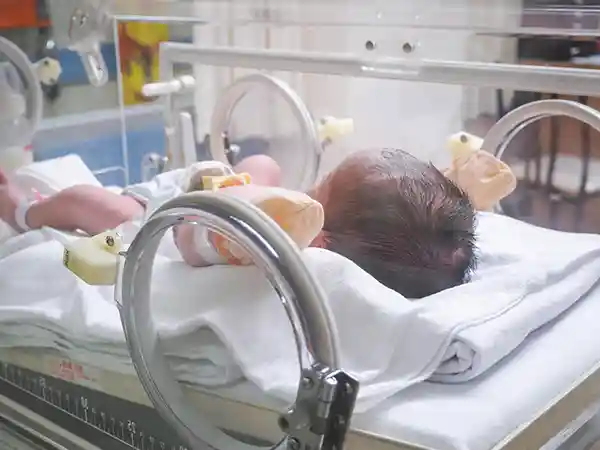
A parent’s guide to understanding, diagnosing, and treating brachial plexus birth injury: nerve damage to the network supplying the shoulder, arm, and hand. With early detection and the right treatment, many children recover full or near-full arm function.
U.S. births result in a brachial plexus birth injury
4–9 months
Optimal surgical window for severe injuries that don’t respond to therapy
3× higher
Risk of brachial plexus injury when shoulder dystocia is present
What is a brachial plexus birth injury?
A brachial plexus birth injury refers to damage to the bundle of nerves that originate in the neck (spinal nerve roots C5 through T1) and travel through the shoulder to the arm and hand. These nerves control both the movement and feeling of the upper limb.
During birth, if the baby’s head and neck are stretched too far away from the shoulder, or the shoulder becomes stuck behind the mother’s pelvic bone (shoulder dystocia), these nerves can be stretched, torn, or in the most extreme cases pulled from the spinal cord entirely.
Depending on the severity, the baby may have partial weakness, loss of motion, or complete paralysis of the affected arm. Some babies recover fully with minimal intervention; others may need surgery and ongoing therapy. The condition may also be referred to as “obstetric brachial plexus paresis,” “Erb’s palsy” (for upper-nerve root injuries), or brachial plexus birth palsy.
The severity and treatment path for brachial plexus birth injury depends entirely on the type of nerve damage. There are four types, ranging from temporary nerve stretching to permanent avulsion from the spinal cord.
Mildest
Neuropraxia, nerve stretching
The nerve is stretched but not torn. The most common type. Most infants recover full movement within three months with physical therapy alone, no surgery required. Often produces a temporary burning or tingling sensation.
Moderate
Neuroma, scar tissue forms
The nerve tears slightly and heals improperly, forming scar tissue that compresses healthy surrounding nerves. Causes partial function loss. May recover some movement with therapy but often requires surgical intervention for full restoration.
Severe
Rupture, nerve completely torn
The nerve is completely torn but not at the spinal root. Does not heal on its own. Requires nerve grafting surgery, a healthy nerve from another part of the body is used to bridge the torn ends. Surgery should occur within 4 to 9 months for best results.
Most Severe
Avulsion, nerve torn from spinal cord
The nerve is ripped away from the spinal cord entirely, permanent damage that cannot be repaired by reattachment. Surgery may reroute nearby functioning nerves to compensate. Can also cause Horner’s syndrome (drooping eyelid, small pupil) when sympathetic fibers near T1 are affected.
How is brachial plexus injury diagnosed?
Diagnosis begins with a thorough clinical examination by a pediatrician, pediatric neurologist, or upper-extremity specialist. The first step is identifying signs such as a limp arm, minimal movement, or absent normal reflexes on the affected side.
The doctor assesses whether the baby’s shoulder, elbow, wrist, and hand move normally and whether the baby can grasp or respond to touch on the affected side. If symptoms persist beyond the early weeks, further diagnostic tests are used:
Imaging and electrodiagnostics answer different questions. MRI or CT myelography shows the nerve roots, the plexus anatomy and any related soft-tissue damage, which is how the level and extent of injury get established. Nerve conduction studies and EMG measure whether signals are getting through and which muscles are affected, separating a nerve that is bruised from one that is torn. X-rays rule out the clavicle and humerus fractures that often accompany a difficult delivery, and that pairing matters: in a series of 1,383 neonates seen at a brachial plexus referral clinic, 320 had an accompanying clavicle fracture.
Early assessment is important because timely interventions (especially when surgery may be needed) are closely linked to better long-term outcomes.
At what age can brachial plexus injury be diagnosed?
A suspected brachial plexus birth injury can be identified immediately after birth if a baby shows limited or absent motion in one arm, lacks normal reflexes, or has clear signs of nerve dysfunction. However, more definitive diagnosis and treatment planning typically occur in the first weeks to months of life.
Pediatricians recommend close monitoring during the first 3 to 6 months to track whether spontaneous recovery is underway. If there is little or no improvement by 3 to 6 months, further specialist evaluation or surgical consultation is generally advised. In some milder cases the injury may go unnoticed until later (when the child begins to reach for toys, crawl, or walk), and reveals weakness or limited arm motion compared to peers.
Early involvement of therapy and specialists is beneficial even when a full diagnosis is still being refined. Don’t wait for a definitive answer before beginning therapy; early range-of-motion work is important regardless of injury type.
The 3-month rule
If your baby’s affected arm is not showing clear improvement by 3 months of age, ask your pediatrician for an immediate referral to a pediatric neurologist or upper-extremity surgeon. The surgical window closes, acting by 4 to 9 months significantly improves outcomes.
Symptoms of brachial plexus injury in infants
Symptoms vary depending on which nerve roots are affected and how severely. The injury may affect the upper roots (C5–C6), lower roots (C8–T1), or the entire plexus, producing different patterns of weakness and sensation loss.
Typical warning signs in a newborn include:
The signs appear in the first days. A baby who does not move one arm, or uses it noticeably less than the other. The arm held limp at the side with the elbow extended and the wrist rotated inward, the posture usually described as the waiter’s tip position, which points to an upper-root injury. Absent or weak reflexes on that side, including the biceps and Moro reflexes. A grasp reflex that is intact while wrist and finger movement is limited, which localizes the problem further. Reduced tone in the affected limb. And later, motor milestones reached on one side and not the other.
In older infants, signs may include weaker grip, poor coordination, muscle atrophy, shoulder joint deformity, or persistent muscle tightening. Because nerves regenerate slowly, signs may change over time, some children improve while others develop joint stiffness from secondary contracture. Raise concerns with your pediatrician if the affected arm is not improving by 3 months or if the shoulder appears stiff.
What causes brachial plexus injury in babies?
The most common cause is shoulder dystocia, when the baby’s shoulder becomes stuck behind the mother’s pubic bone after the head has delivered. The resulting traction on the head and neck stretches or tears the brachial plexus nerves.
Key risk factors
Shoulder dystocia is the largest single risk factor by a wide margin. Macrosomia raises risk, particularly where the mother has diabetes or gestational diabetes, and maternal obesity operates through the same route by producing larger babies and harder deliveries. Prolonged or difficult labor increases the pressure on the baby’s neck and shoulder. Instrument-assisted delivery during a shoulder dystocia raises risk sharply. And breech or otherwise unusual positioning increases tension on the plexus directly.
Can brachial plexus injury be caused by medical malpractice?
Yes, some brachial plexus birth injuries occur when the standard of obstetric care was not met. Not all cases are due to negligence, but expert review of birth records can determine whether preventable errors played a role.
A claim turns on specific departures rather than on the injury itself. Shoulder dystocia mishandled, or the recognized maneuvers delayed. Excessive traction applied after the shoulder was known to be impacted. Known risk factors, fetal macrosomia and maternal diabetes among them, neither managed nor communicated. Instrument-assisted delivery used improperly in a high-risk birth. Or a cesarean neither offered nor recommended where fetal size and pelvic factors warranted it.
Determining whether malpractice occurred requires detailed review of medical records, fetal monitoring, labor and delivery notes, the timing of interventions, and expert opinion. If you suspect negligent care, our birth injury attorneys are available at no charge to review your case and advise you on your options.
A brachial plexus birth injury may overlap with or lead to associated conditions. Many are directly caused by the same nerve damage; others develop over time without early intervention.
Injury to the upper roots (C5–C6), causing shoulder and upper arm weakness. The most common form of brachial plexus birth injury, arm hangs limply in the classic “waiter’s tip” position.
Klumpke’s Palsy
Injury to the lower roots (C8–T1), affecting the forearm and hand. Can cause a “claw hand” deformity. Rarer than Erb’s palsy but often more difficult to treat.
Horner’s Syndrome
In severe avulsion injuries involving the T1 sympathetic root, signs include drooping eyelid, small pupil, and reduced facial sweating on the affected side. Indicates significant nerve root damage.
Contractures & Joint Deformity
Without timely therapy, stiffness in the shoulder, elbow, or wrist can develop and limit movement long-term. Passive range-of-motion exercises from early infancy are the primary prevention.
Developmental Asymmetry
Because babies may prefer the unaffected arm, delays in bimanual tasks or fine-motor skills can emerge. Occupational therapy addresses these developmental gaps alongside motor recovery.
Neuropathic Pain
In older children with incomplete recovery, nerve injuries may produce persistent discomfort or sensory deficits in the affected arm. Pain management becomes part of the longer-term care plan.
Is there a cure for brachial plexus birth injury?
There is no single cure that guarantees full recovery in every case, but many infants with less-severe injuries recover substantial or full function, particularly when treatment begins early. “Cure” is the wrong word; “recovery” better describes what modern treatment can achieve.
Mild injuries (nerve stretching/neuropraxia) often resolve on their own with physical therapy. In more severe cases such as nerve rupture or avulsion, a combination of therapy and timely surgery offers the best chance of meaningful improvement. Surgeries such as nerve repair, nerve grafting, or nerve transfers may restore function, but results typically take months to years to fully manifest, nerve growth is slow.
The earlier surgical intervention occurs (often within the first 3 to 9 months of life), the better the chances of success. After 18 months, muscles may atrophy and lose their ability to respond to reinnervation, significantly limiting the benefit. With modern therapy, surgery, and early intervention, good function is achievable for many children.
Treatment for brachial plexus birth injury
Treatment is tailored to the severity of nerve damage and the child’s response over the first months of life. It broadly falls into conservative therapy and surgical intervention, with the threshold for surgery typically reached at 3 to 6 months without adequate improvement.
Non-surgical treatment
For many infants, especially those with milder injuries, therapy begins early and can lead to full recovery:
Conservative management comes first and works for most infants. Physical and occupational therapy maintain joint range, prevent stiffness and contracture, and encourage the child to use the arm. Splinting or bracing holds the arm, wrist or hand in position to prevent deformity. Passive and active range-of-motion work usually begins around three weeks of age. And close monitoring is what makes the rest work, because the point of regular assessment is to catch a stalled recovery early enough for surgical referral to still help. Our page on physical therapy covers the underlying approach.
Surgical treatment
If there is minimal or no improvement by 3 to 6 months, surgical options are considered. Timing is critical, most centers suggest surgery between 4 and 9 months offers the greatest chance of recovery:
Where recovery stalls, four surgical options exist. Direct nerve repair or grafting bridges a damaged segment using nerve tissue taken from elsewhere. Nerve transfer connects a working donor nerve to the injured one to reanimate a muscle, and is used for rupture or avulsion. Tendon or muscle transfer comes later, in older infants with established secondary problems, and improves function rather than restoring the original anatomy. Osteotomy repositions bone to correct a joint deformity produced by muscle imbalance.
Long-term follow-up
Recovery takes time. Nerve growth is slow, and full results of surgery may only be apparent over years. Even with good recovery, children may need ongoing therapy, monitoring of shoulder development, and adjustments as the limbs grow. Parents play a foundational role: ensuring therapy is consistent, watching for signs of contracture, and advocating with specialists when progress stalls.
A brachial plexus birth injury can be a frightening diagnosis for families, especially when an arm seems limp, unused, or your baby appears to favor one side. But there is a lot to be hopeful about. With early observation, appropriate therapy, and timely surgical intervention when needed, many children regain full or near-full use of their arm.
The key is early detection, proactive management, and a coordinated care team including a pediatric neurologist or upper-extremity surgeon, physical and occupational therapists, and you as your child’s most important advocate.
If your child’s delivery was difficult, birth weight high, or there were signs of shoulder dystocia (and you notice limited movement in one arm), raise the issue with your pediatrician as soon as possible. Ask for a referral to a specialist, request clear timelines for improvement, and keep careful records of therapy and movement progress. Don’t wait beyond the typical window of improvement. Timely action matters.
Was your child’s injury preventable?
If you believe medical mistakes contributed to your child’s brachial plexus injury, contact us today for a free, confidential review with a nurse or lawyer.
Frequently asked questions about brachial plexus birth injury
An injury to the network of nerves running from the neck to the shoulder, arm and hand, which controls movement and sensation in that limb. When it happens during delivery it is usually caused by traction on the head and neck as the shoulder is freed, and the upper roots are the ones most often affected.
Most do. In a referral clinic series of 1,383 neonates, 72% of those without an accompanying clavicle fracture resolved spontaneously and 74% of those with one did. Measured across a whole delivery population rather than a referral clinic, where milder cases never reach a specialist, resolution reached 94.4% and 98.1% respectively. The injuries that persist are a minority, but for that minority the impairment is permanent.
Severity, and it is measured. Under the Narakas classification, 64% of infants in groups I and II recovered biceps function spontaneously by three months against 9% in groups III and IV. By six months, 65% of the milder group had recovered completely against 14% of the more severe. The odds of biceps recovery at three months were roughly 19 times higher in the milder group.
Shoulder dystocia is the dominant one. Others include a large baby, maternal diabetes or obesity, prolonged or difficult labor, instrument-assisted delivery, and breech or unusual positioning. Several of these are identifiable before delivery, which is why failing to plan for them is the recurring allegation when a claim follows.
Therapy first, starting within weeks: range of motion to prevent contracture, splinting where needed, and regular reassessment. Where recovery stalls, surgery follows, usually nerve grafting or nerve transfer, and timing matters because the window for reinnervating a muscle is limited. Later operations address secondary deformity rather than the nerve itself.
Recovery of biceps function is the standard marker. Surgical exploration is considered where there is no biceps elbow flexion at 3 months, or no antigravity elbow flexion at 6 months with scores that have stopped improving. Outcomes are better when surgery happens before 6 months.
Not every case, and an honest assessment says so early. Shoulder dystocia can occur without negligence and most injuries resolve regardless. A claim requires a documented departure from the standard of care, such as excessive traction after impaction was recognized, a delayed or mishandled maneuver, or a cesarean not offered where risk factors clearly indicated one.