Treatment for cerebral palsy cannot cure the underlying brain injury, but it can dramatically improve quality of life, independence, and long-term outcomes. The right plan is customized to your child’s specific type, severity, and priorities, and it evolves as they grow.
Of people with CP can walk independently or with assistive devices
75%
Of people with CP experience speech or language challenges
$1.7M
Estimated lifetime cost of care per child with CP
What is the best treatment for cerebral palsy?
The treatments most commonly used for cerebral palsy are therapy, medication, and surgery. Since no treatment can cure the underlying brain damage that causes CP, the focus is on reducing pain and discomfort, managing symptoms, and optimizing long-term quality of life through independence.
From our medical reviewer
There is no single ‘best’ treatment for cerebral palsy. There is the right combination for your child, and it changes as they grow. The families who see the most progress treat therapy as a lasting partnership and keep asking how each intervention is actually helping their child function day to day.
Each treatment plan is built around the individual child.
A treatment plan is built around five things: the type of cerebral palsy, whether spastic, athetoid, ataxic, hypotonic or mixed; any associated conditions such as epilepsy, learning disability or problems with speech, hearing or vision; the severity, described by GMFCS level; which areas of the body are most affected; and the priorities of the family and the goals of the child themselves. That last one is the item most often skipped.
CP is non-progressive. It does not worsen as your child grows. This means early, consistent treatment builds lasting function rather than simply slowing decline.
Which doctors specialize in cerebral palsy treatment?
Managing cerebral palsy effectively typically requires a team of specialists rather than a single physician. Your child’s pediatrician establishes the overall treatment plan, then coordinates referrals to specialists based on your child’s specific challenges.
Depending on your child’s needs, the care team varies.
Pediatric Neurologist
Neurosurgeon
Orthopedic Surgeon
Physiatrist (Rehab MD)
Speech-Language Pathologist
Physical Therapist
Occupational Therapist
Ophthalmologist
Developmental Pediatrician
Urologist
Audiologist
Nutritionist / Dietitian
The frequency with which your child sees each specialist will depend on the priority of their individual needs. Early in treatment, a neurologist and PT/OT are usually the most frequent. As your child grows, orthopedic concerns or communication therapy may become more central.
Medications used to treat cerebral palsy
While there are no medications that treat the underlying brain damage that causes cerebral palsy, several are commonly used to manage symptoms. The right medication depends on the specific symptoms being treated. See our complete guide to cerebral palsy medications.
Pain Relievers
Ibuprofen (Advil) and Acetaminophen (Tylenol) for managing chronic discomfort and pain associated with muscle tension or post-procedure recovery.
Injections for Spasticity (Botox)
Botulinum toxin reduces muscle contractions to relieve pain and stiffness, improve motor function and range of motion. Typically requires treatment every few months.
Oral Muscle Relaxants
Zanaflex, Baclofen (also available as an intrathecal pump for continuous relief), Dantrolene sodium, and Diazepam reduce spasticity and involuntary movements.
Anticholinergics
Block neurotransmitters to manage tremors and involuntary movements. Examples include Benztropine and Trihexyphenidyl.
Anti-Seizure Medications
Seizures affect nearly 25% of children with CP. Options include Lamictal, Trileptal, Carbamazepine, Topiramate (Topamax), and Depakote. Ask your child’s neurologist about clinical trial options and off-label approaches.
Physical therapy for cerebral palsy
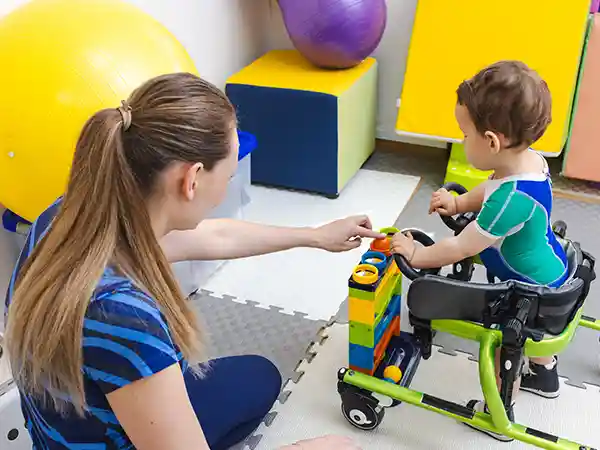
Physical therapy is usually one of the first treatments implemented for a child with CP. It develops motor ability, endurance, and functional independence, and the earlier it starts, the greater its impact on long-term outcomes.
What PT focuses on
Each physical therapy plan is different, though the targets are consistent.
1Targeted strength training to build muscle in affected limbs
2Stretching routines to reduce spasticity and prevent contractures
3Muscle relaxation methods and heat/cold therapy for pain
4Walking training and gait improvement
5Wheelchair use and mobility aid training
6Safe transfer techniques (wheelchair to vehicle, toilet, bath)
Tools include resistance bands, weights, balance balls, and orthotics like braces and splints that ease movement and promote proper growth.
Occupational therapy for cerebral palsy
Occupational therapy focuses on helping children reach independence in the fine motor skills required for daily living, targeting the detailed movements that physical therapy doesn’t address.
For children with cerebral palsy, OT can help with dressing, eating and drinking, personal hygiene, school tasks, home activities, and long-term career planning. Occupational therapy concentrates on a few specific areas.
Occupational therapy addresses three problems in particular. Motor impairment, where difficulty grasping or holding makes eating, dressing, writing and personal care harder. Vision impairment, which affects up to 75% of children with cerebral palsy to some degree, and which occupational therapy works around through verbal adaptation and environmental changes. And cognitive support, where the routine and structure of daily task training does real work.
Speech & language therapy for cerebral palsy
Around 25% of children with CP experience speech difficulties, and 4% have hearing loss. Speech and language therapy helps those with CP communicate and understand language with greater ease, which studies show is critical to overall well-being.
Depending on your child’s capabilities and goals, a speech therapist draws on several different tools to increase communication.
Speech therapy covers four areas. Communication devices, from a laminated board through to speech-generating systems and eye-tracking, which matter because about half of people with cerebral palsy have typical intelligence and may have no other way to demonstrate it. Sign language, useful where spoken language is difficult. Gestures, pointing and augmentative communication systems. And swallowing therapy, which is the one with the highest stakes, since unsafe swallowing drives the aspiration pneumonia that dominates the mortality data.
Recreational therapy for cerebral palsy
Recreational therapy is a powerful way to address motor function while also improving a child’s mood, confidence, and quality of life. It takes a child’s focus off the work of traditional therapy and channels effort through activities they enjoy.
Examples include swimming, basketball, horseback riding (hippotherapy), painting and sculpture, biking, and dance. These activities target muscle strength and posture while providing huge benefits to a child’s overall mood, social connections, and sense of accomplishment. Learn more at our alternative therapy guide.
Experimental & alternative treatments
Research into new CP treatments is advancing rapidly. While the FDA has not yet approved alternative therapies specifically for cerebral palsy, several promising approaches are in clinical trials or emerging research phases. See our full guide to alternative treatments for cerebral palsy.
Stem cell therapy. clinical trials are testing whether stem cell infusions can safely repair damaged brain tissue in children with CP. A partnership with Duke University explores umbilical cord blood and cord tissue-derived cells for their regenerative potential.
Focused ultrasound therapy. a clinical trial at Children’s National Hospital targets the globus pallidus in children with dyskinetic CP, using non-invasive ultrasound beams for thermal ablation of problem tissue without surgery or medication.
Selective brain cold therapy. targeted hypothermia applied directly to brain tissue may protect against damage after oxygen loss, avoiding the complications of whole-body cooling used in current HIE protocols.
Restorative therapies. Functional Electrical Stimulation (FES), Robotic-Assisted Treadmill Therapy, and Constraint-Induced Movement Therapy (CIMT) are showing meaningful results in improving walking ability and motor function in children with spastic CP.
DNA & biomarker research. genetic studies help identify CP risk factors and develop tailored treatments. Advanced neuroimaging can now predict CP risk in premature infants, enabling earlier intervention before symptoms fully emerge.
Surgical treatments for cerebral palsy
Many children with CP face issues that can’t be managed with therapy and medications alone. Cerebral palsy surgery typically focuses on relieving the discomfort of tight muscles, addressing bone and joint abnormalities, or managing uncontrollable movement.
Several surgical options exist.
Eight procedures come up most often. Selective dorsal rhizotomy cuts selected sensory nerve fibers to reduce spasticity durably, and it appears among the interventions with demonstrated effect in the 2019 evidence review. Tendon lengthening releases tight tendons to improve range and gait. Muscle ablation reduces tightness in overactive groups. Hip repair or reconstruction addresses the displacement common at higher GMFCS levels, and hip surveillance on a schedule is what keeps it from becoming an emergency: a Swedish population programme took hip dislocation from 8% to zero across two decades. Osteotomy repositions bone to correct joint alignment. Spinal surgery corrects scoliosis. Foot deformity correction addresses toe-walking. And an intrathecal baclofen pump delivers a continuous muscle relaxant to the spinal cord.
For children with persistent symptoms, these procedures can provide longer-lasting relief than ongoing therapy and medications alone. Most insurers require therapy or medication trials first. For families where surgery is needed but costs are prohibitive, a birth injury legal claim can be a critical funding source.
Treatment for conditions related to cerebral palsy
Brain injury during delivery can result in several associated conditions alongside cerebral palsy. Identifying and treating each one as part of the overall plan maximizes a child’s independence and quality of life.
Several related conditions can be managed effectively.
Associated conditions each have their own management. Epilepsy, which affects roughly 4 in 10 children with cerebral palsy, is treated with anticonvulsants, sometimes a ketogenic diet, and surgery where the epilepsy resists medication. Speech problems are handled with speech-language therapy, communication devices and botulinum toxin for drooling. Chronic pain needs medication management and physical therapy, with nerve blocks or orthopedic intervention in some cases. Vision and hearing impairments are addressed with lenses, patching for strabismus, hearing aids or cochlear implants. ADHD responds to behavioral therapy, a structured school plan and medication where appropriate. And learning disabilities are supported through an Individualized Education Program, cognitive therapy and assistive technology.
If your child has been diagnosed with cerebral palsy, ask their care team about screening for coexisting conditions to ensure they’re receiving all necessary care.
Deciding your child’s treatment needs
Treatment is a conversation, not a prescription
With numerous treatment options available, it’s important to work with your child’s pediatrician to set out a plan, but also to think beyond physical improvement. Consider their emotional well-being and social fulfillment. The emotional distress or discomfort of some treatments may not always be justified by the improvement to daily life.
Children cope with their disabilities differently. Some may be comfortable with their current condition. Your child’s opinion should play a central role in treatment decisions. Before making choices, have open conversations with specialists about both the physical and emotional effects of each treatment. Most importantly, talk honestly with your child.
Finally, weigh the cost of therapies against potential gains. With the lifetime cost of caring for a child with CP estimated at $1.7 million, families must decide which treatments are affordable, and make sure they’ve explored all available financial support, including disability benefits, grants, insurance, and legal compensation.
If your child has been diagnosed with cerebral palsy and you suspect a mistake was made during delivery, our lawyers will work with medical experts to estimate the lifetime cost for optimal care before making a claim and throughout the entire process. The Cerebral Palsy Center works exclusively with lawyers who specialize in CP birth injury lawsuits and have recovered billions in financial assistance for birth injury victims nationwide.
Our birth injury lawyers are available 24/7 at no cost, with no fee unless compensation is recovered. Every state has a filing deadline. Contact us today to find out if your family qualifies before the window closes.
Free case review, no obligation
Compensation from a birth injury claim can be the primary source of funding for your child’s lifetime care. Speak with a lawyer today to find out if your family qualifies.
Frequently asked questions about CP treatment
The most effective approach is a customized combination of physical therapy, occupational therapy, speech therapy, medications, and in some cases surgery. The specific mix depends on the type and severity of CP, associated conditions like epilepsy or vision impairment, and which areas of the body are most affected. There is no single plan that works for every child.
There is currently no cure for the brain injury that causes cerebral palsy. The focus of treatment is on managing symptoms, optimizing independence and quality of life, and reducing pain and discomfort. The good news: cerebral palsy does not worsen over time, and early intervention significantly improves long-term outcomes.
THC and CBD have been studied for managing CP symptoms such as muscle spasms, pain, seizures, and speech. Research shows some benefit, though medical marijuana is not available in all states. Check your state’s laws and consult with your child’s neurologist before considering it as part of a treatment plan.
The latest areas of research include stem cell therapy, focused ultrasound, robotic-assisted treadmill therapy, constraint-induced movement therapy (CIMT), neurologic music therapy, virtual reality rehabilitation, brain-computer interfaces, and transcranial magnetic stimulation. Clinical trials are ongoing: ask your neurologist about options at clinicaltrials.gov.