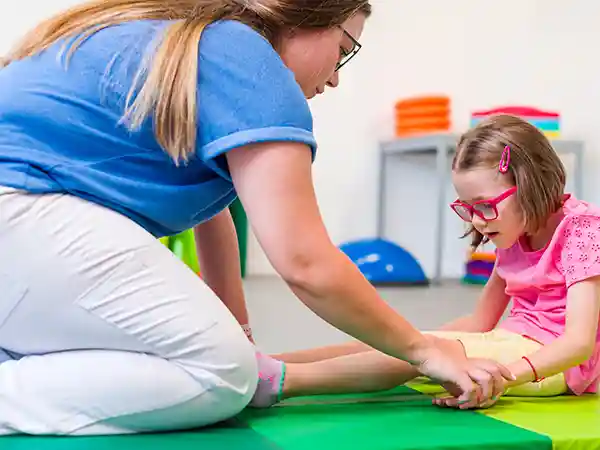
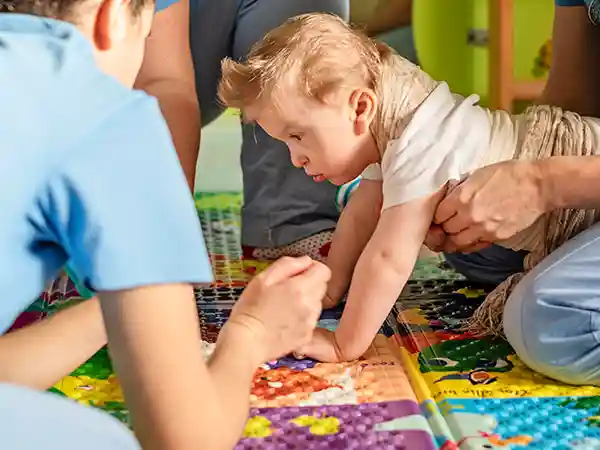
Cerebral palsy is not a single condition but a spectrum of movement disorders. Each type is defined by which area of the brain is damaged and how it affects muscle control, coordination, and posture. Understanding your child’s specific type is key to getting the right treatment.
Children in the U.S. are affected by cerebral palsy
~50%
Of those with CP experience speech or language disorders
~80%
Of CP cases are the spastic type, caused by motor cortex damage
The 4 main types of cerebral palsy at a glance
The CDC groups cerebral palsy into four main types: spastic, dyskinetic, ataxic and mixed. The first three are each defined by which brain region was damaged and what movement pattern results, and mixed CP combines features of more than one, most often spastic and dyskinetic. Hypotonic CP, or low muscle tone, appears on some lists as a fifth type, but it is usually a stage in infancy that develops into one of the others.
The classification is old. As research advanced through the 19th century, doctors began separating the condition’s effects into the categories still in use today.
The specific type of CP a child has significantly shapes their symptoms, diagnostic process, and treatment plan. Below is a quick overview of the four main types and hypotonic CP, followed by a detailed look at each.
Spastic cerebral palsy is the most common type, affecting approximately 70% to 80% of children diagnosed with CP. It is characterized by increased muscle tone: stiffness that makes movements awkward, jerky, or difficult. The severity and affected body parts vary, giving rise to three main subtypes: hemiplegia (one side), diplegia (both legs), and quadriplegia (all four limbs). A rarer fourth pattern, monoplegia, affects only one limb. The percentage each type accounts for, and the sources those percentages come from, sit on our cerebral palsy statistics page.
Symptoms of spastic cerebral palsy
The tone is velocity dependent, which is the detail that defines it: move a limb slowly through its range and it can feel close to normal, move it quickly and it catches. Clinicians grade that resistance on the Modified Ashworth Scale, six grades running 0, 1, 1+, 2, 3 and 4. Reflexes are exaggerated, ankles pull into plantarflexion producing toe walking, the thighs can cross into a scissored gait, and rolling, sitting and crawling arrive late or in an altered form.
Area of brain affected
Spastic CP results from damage to the motor cortex or pyramidal tracts, areas responsible for controlling voluntary muscle movements. This damage often occurs before or during birth, or shortly after. White matter injury (periventricular leukomalacia) typically causes spastic diplegia, while more widespread gray matter damage leads to spastic quadriplegia.
Causes of spastic cerebral palsy
Very preterm birth and low birth weight sit behind a large share of cases, because the white matter around the ventricles is vulnerable at that stage and it carries the fibers serving the legs. A systematic review found periventricular damage in 90% of preterm-born children with cerebral palsy against 20% of those born at term. At term the pattern shifts toward grey matter injury, most often after oxygen deprivation, and other causes include infection reaching the developing brain and untreated severe jaundice.
Treatment of spastic cerebral palsy
While there is currently no cure for spastic CP, treatments significantly improve quality of life and independence:
Physical therapy works on the joints the tone is pulling on and on practicing the tasks a child wants to do, with occupational therapy taking the hands and speech therapy covering communication and swallowing. Tone management follows the distribution: botulinum toxin for spasticity confined to named muscles, oral medication or an intrathecal baclofen pump where it is widespread, and surgery, including selective dorsal rhizotomy or tendon lengthening, once a contracture is fixed rather than dynamic. Running underneath all of it is hip surveillance, which took dislocation from 8% to zero across two decades of Swedish birth cohorts.
Prognosis
The outlook for children with spastic CP varies widely depending on severity and early treatment. With comprehensive therapy and strong support, many children achieve significant independence, attend school successfully, and participate actively in family and social life. Early intervention makes the most meaningful difference.
Spastic CP subtypes
Spastic hemiplegia — affects one side of the body (arm and leg). Often the mildest presentation; most children walk independently
Spastic diplegia — primarily affects both legs, with arms relatively spared. Scissor gait is common. Many walk with aids or independently
Spastic quadriplegia — affects all four limbs and often the trunk and face. The most severe subtype, often requiring full-time support and assistive technology
Spastic monoplegia — the rarest subtype, affecting only one limb. Symptoms are often subtle and noticed first as a fine-motor or gait asymmetry
Ataxic cerebral palsy is the rarest type, affecting about 5% to 10% of individuals diagnosed with CP. It primarily impacts balance, coordination, and depth perception. The name comes from the Greek word for “lack of order,” which captures how movements feel to those with this type: unsteady, unpredictable, and difficult to control with precision.
Symptoms of ataxic cerebral palsy
Balance is the problem rather than power. The gait is wide-based and unsteady, and a tremor appears as a hand approaches its target rather than at rest, which is what makes writing, buttoning and reaching for a cup difficult. Speech is often slow and imprecise. Depth perception and visual coordination can be affected too, since the cerebellum is doing more than steadying limbs.
Area of brain affected
Ataxic CP stems from damage to the cerebellum, the brain region responsible for coordinating muscle movements, maintaining balance, and spatial awareness. The cerebellum acts as the body’s fine-tuning system; damage here disrupts the smooth execution of movement rather than the ability to move at all.
Causes of ataxic cerebral palsy
Ataxic cerebral palsy is the group most often reclassified, and the reason matters. Low tone and poor coordination in infancy can resolve into a different pattern entirely, or turn out not to be cerebral palsy at all. Progressive cerebellar conditions and inherited disorders have to be excluded first, because cerebral palsy is non-progressive by definition and a course that worsens points somewhere else. Where a cause is identified it is usually the familiar list: oxygen deprivation around birth, maternal infection, or a malformation formed while the brain was developing.
Treatment of ataxic cerebral palsy
Therapy targets stability rather than strength, and equipment does a lot of the work: weighted utensils damp a tremor, a walker widens the base, and a stabilized surface makes a task possible that practice alone would not. Speech therapy addresses the imprecision rather than the volume.
Prognosis
With consistent therapies and early interventions, many children with ataxic CP can significantly enhance their motor skills and independence. Because it is rarer, specialized therapy tailored specifically to ataxic symptoms (rather than the spasticity-focused approaches used for most CP) produces the best outcomes.
Diagnosing ataxic CP
Ataxic CP can be mistaken for other conditions affecting balance, and diagnosis is sometimes delayed. Learn more about the full cerebral palsy diagnosis process, including the tests used to confirm CP type.
Athetoid, or dyskinetic cerebral palsy, accounts for roughly 10–15% of all CP cases. It is characterized by the brain’s movement signals becoming distorted, causing unexpected and involuntary motions that make everyday tasks challenging. The basal ganglia act as traffic controllers for movement, damage here leads to mixed signals and the characteristic uncontrolled movements of this type.
Symptoms of athetoid / dyskinetic cerebral palsy
Three movement patterns fall under this heading. Athetosis produces slow writhing movements, most visible in the hands and face. Dystonia produces sustained contractions that twist a limb into an abnormal posture. Chorea produces brief, irregular, unpredictable movements. Two features identify the group clinically: the movements increase with voluntary effort and with emotion, and they disappear during sleep, so a child performs worst at the moment they are trying hardest. Tone fluctuates rather than staying high, and the muscles controlling breath, voice and swallowing are frequently involved.
Area of brain affected
Athetoid CP primarily involves damage to the basal ganglia (a group of deep brain structures responsible for coordinating smooth, purposeful movements), and sometimes the thalamus, which relays sensory and motor signals. Together, these structures regulate the initiation and execution of voluntary movement; damage disrupts both.
Causes of athetoid / dyskinetic cerebral palsy
This is the type most closely tied to a specific injury. Damage to the basal ganglia and thalamus, the deep structures regulating movement, is the characteristic finding, and it is associated with acute events around birth. Oxygen deprivation is one. Kernicterus, the brain injury caused by untreated severe jaundice, is the other, and it is largely preventable with bilirubin screening.
Treatment of athetoid / dyskinetic cerebral palsy
Strengthening is not the main lever, because the problem is control rather than power. Therapy concentrates on stabilizing posture so purposeful movement has something to work from, on seating, and on adapting the task. Since effort and emotion increase the movements, reducing the demand often improves performance more than increasing effort does. Communication devices matter here more than in any other type, and the evidence indicates they do not suppress speech.
Prognosis
While athetoid CP presents significant challenges, many children can lead fulfilling lives through targeted interventions and ongoing support. Prognosis depends heavily on early intervention and consistency in therapy. Although the condition itself doesn’t worsen over time, symptoms can evolve, and with appropriate care, significant progress in communication, mobility, and independence is achievable.
Kernicterus is preventable
Severe untreated jaundice causing kernicterus (and resulting dyskinetic CP) is one of the most preventable causes of cerebral palsy. If your child’s CP was linked to untreated jaundice, speak with a lawyer today.
Hypotonic cerebral palsy
Rare
Often misdiagnosed in infancy
Brain area: Cerebellum & brainstem
Unlike other cerebral palsy types characterized by stiffness or involuntary movements, children with hypotonic CP exhibit unusually loose, relaxed muscles. It is sometimes called “floppy baby syndrome” because the muscles lack the necessary tone to support effective movement. Hypotonic CP is often one of the more challenging types to diagnose in early infancy.
Symptoms of hypotonic cerebral palsy
A baby who feels limp when picked up, with poor head control, joints that move further than expected, and milestones that arrive late. Feeding, swallowing and breathing can all be affected, because the same low tone reaches the muscles that manage them.
Area of brain affected
Hypotonic CP typically results from damage or developmental anomalies in the cerebellum and sometimes the brainstem. The cerebellum plays a crucial role in regulating muscle tone, balance, and fine motor skills. Damage here leads directly to reduced muscle tone, making controlled movements more difficult.
Causes of hypotonic cerebral palsy
The honest framing matters more than the list. Low tone in infancy is common, and in most children it evolves into a spastic or dyskinetic pattern as they grow, which is why hypotonia reads better as a stage than as a destination and why it is not one of the three motor types the European registers record. Persistent low tone with no evolution is itself a reason to look for another diagnosis, since several genetic and neuromuscular conditions present that way. The recognized contributors where it does follow a brain injury are oxygen deprivation around birth, infection during pregnancy such as cytomegalovirus, and complications of prematurity.
Treatment of hypotonic cerebral palsy
Therapy builds strength and postural control, with supportive seating and bracing holding a body that cannot yet hold itself. Where feeding or speech is affected, both get assessed on their own terms rather than being folded into the motor plan.
Prognosis
Although hypotonic CP presents unique challenges, children often make significant strides through early and consistent intervention. The degree of improvement varies widely depending on the extent of brain involvement and how early therapies begin. Some children with hypotonic CP transition to a mixed presentation as they develop, gaining elements of spasticity alongside low tone.
Among the main types of cerebral palsy, mixed cerebral palsy is the most complex. It occurs when a child exhibits characteristics from more than one CP type (most commonly a blend of spastic and athetoid/dyskinetic symptoms) because damage has occurred across multiple brain regions. This combination presents its own challenges for both diagnosis and treatment.
Brain areas affected in mixed CP
Mixed presentations follow injury reaching more than one region: the motor cortex, producing spasticity, the basal ganglia, producing involuntary movement, and sometimes the cerebellum, producing incoordination. That is also why the label exists at all, and why the classification systems ask for a dominant type to be assigned anyway.
The precise areas involved vary greatly from child to child, explaining the wide diversity in symptoms among those with mixed CP.
Symptoms of mixed cerebral palsy
Spasticity in one part of the body alongside involuntary movement in another, with tone that varies between limbs rather than settling at one level. Posture, balance, speech and swallowing are commonly affected, and milestones arrive late. What a family sees is a picture that does not fit a single description, which is the practical meaning of the term.
Causes of mixed cerebral palsy
The same events behind the individual types, reaching more of the brain: oxygen deprivation during labor or delivery affecting several regions, very preterm birth and low birth weight, untreated severe jaundice or neonatal infection, and trauma involving more than one area. Where a delay in acting on fetal distress or in performing an indicated cesarean contributed, that is a question of medical negligence rather than of classification.
Treatment of mixed cerebral palsy
Effective care for mixed CP is highly individualized and typically involves multiple specialists working in coordination:
Treatment follows the features rather than the label, which is the practical reason the box a child ends up in matters less than it seems. Spasticity is managed as spasticity wherever it appears, and involuntary movement is approached differently, with control and positioning ahead of strength. Treatment across all types draws on the same set of therapies, medications and surgical options, weighted differently.
Prognosis
Although mixed cerebral palsy can present complex challenges (and typically carries the most difficult prognosis among CP types), consistent early interventions offer meaningful improvements. With dedicated support, therapy, and a proactive approach, children with mixed CP often make impressive strides toward independence, engagement, and quality of life.
Your family may be entitled to compensation
Many cerebral palsy cases (across all types) result from preventable medical errors during delivery. Contact us today for a free, no-obligation case review with a birth injury lawyer.
Frequently asked questions about cerebral palsy types
There are four main types of cerebral palsy, named for the movement problem each causes. Spastic CP (about 80%) is the most common, with stiff muscles and exaggerated reflexes. Dyskinetic CP (10 to 15%) causes involuntary, uncontrolled movements. Ataxic CP (5 to 10%) affects balance and coordination. Mixed CP combines symptoms of more than one type, most often spastic and dyskinetic. Hypotonic CP, with low muscle tone, is sometimes listed as a fifth type, but in most children it is a stage in infancy that develops into one of the four.
The mildest form is often considered spastic hemiplegia, affecting muscle control primarily on one side of the body. Children with spastic hemiplegia usually experience difficulty with tasks involving coordination or fine motor skills on the affected side, yet often walk independently and engage fully in everyday activities. With targeted physical and occupational therapy, many lead relatively active, unaffected lives.
Spastic hemiplegia primarily affects one side of the body (such as the right arm and leg), often sparing the other side entirely. Movements can be stiff or clumsy, but the unaffected side usually remains fully functional. Spastic diplegia mainly impacts the lower limbs, causing stiffness in the legs, difficulty walking, and impaired balance, with arms usually less affected or unaffected. Both types are manageable with consistent therapy and supportive treatment.
While prognosis greatly depends on individual factors, children with mixed cerebral palsy typically face the most complex challenges because multiple brain areas are involved: leading to a combination of severe muscle stiffness, involuntary movements, coordination issues, and significant developmental delays. However, early intensive therapies and medical interventions can greatly improve outcomes for any type.
The rarest form of cerebral palsy is ataxic cerebral palsy, accounting for around 5–10% of all cases. Ataxic CP impacts the cerebellum (the brain’s balance and coordination center), leading to shaky, unsteady movements, balance difficulties, and depth perception challenges. Because it’s less common, specialized therapy tailored specifically to ataxic symptoms produces the best results.
The most severe form is often spastic quadriplegia, affecting all four limbs and often impacting speech, swallowing, and other essential functions. Children with spastic quadriplegia typically require extensive care including ongoing therapy, medication, assistive technology, and supportive services. Although challenges are significant, specialized care and early intervention can enhance quality of life, comfort, and participation in daily activities.