Kidswell USA is a new company, announced February 16, 2026 by Japan’s Kidswell Bio and the London advisory firm Treehill Partners, to develop SQ-SHED, a cell therapy made from baby tooth stem cells, for cerebral palsy. It is investigational and not FDA approved. As of September 2026, ClinicalTrials.gov lists no US trial of it, so there is no legitimate way for families in the US to get it.
For decades, families affected by cerebral palsy have hoped for treatments that do more than manage symptoms. Traditional cerebral palsy treatment focuses on improving movement, communication, comfort, and independence. But regenerative medicine, particularly stem cell therapy for cerebral palsy, has increasingly entered the conversation.
On February 16, 2026, Kidswell Bio, in partnership with Treehill Partners, announced the creation of a US-based company (Kidswell USA) to advance a cell therapy program for childhood cerebral palsy. The announcement has drawn attention from parents and clinicians alike, raising important questions: What exactly is being developed? How does it work? And when, if ever, might it become available in the United States?
“"The creation of Kidswell USA reflects a growing recognition that the US market has both the regulatory framework and clinical research infrastructure needed to rigorously test stem cell therapy for cerebral palsy."”
— Kidswell USA
The launch of Kidswell USA
Kidswell USA is being set up as a US-based company to accelerate development of Kidswell Bio’s cell therapy platform in the American regulatory and clinical environment. According to the companies’ February 2026 announcement, Treehill Partners, a healthcare advisory firm, will provide Kidswell USA’s senior management, and Thermo Fisher Scientific was chosen as the preferred development service partner. The announcement does not say how much money, if any, has been invested.
The announcement frames the move around the US market. Kidswell’s chief executive said the company wants to develop its most innovative therapies for that market and will use Thermo Fisher’s US infrastructure to move them through the clinic toward commercialization.
For parents, this development does not mean the therapy is immediately available, but it signals that formal regulatory pathways are being pursued rather than informal or offshore treatment models.
Kidswell Bio’s cell therapy platform
Kidswell Bio has focused on developing a proprietary cell therapy derived from specialized stem cells with neuroregenerative potential. The company’s research centers on the idea that certain stem cells may help modulate inflammation, promote neural repair, and support functional improvement after early brain injury.
Unlike some stem cell approaches that rely on bone marrow or umbilical cord blood, Kidswell’s platform is based on a unique source: stem cells derived from exfoliated deciduous teeth, commonly referred to as “baby teeth.” These cells belong to a category known as SHED (stem cells from human exfoliated deciduous teeth).
Preclinical and early clinical-stage work in regenerative medicine suggests SHED cells may release signaling molecules that support neuroprotection and tissue repair. The theory is not that these cells replace damaged brain tissue directly, but that they may create a more supportive environment for recovery and neuroplasticity, an especially important concept in childhood brain injury.
The science behind SHED cells
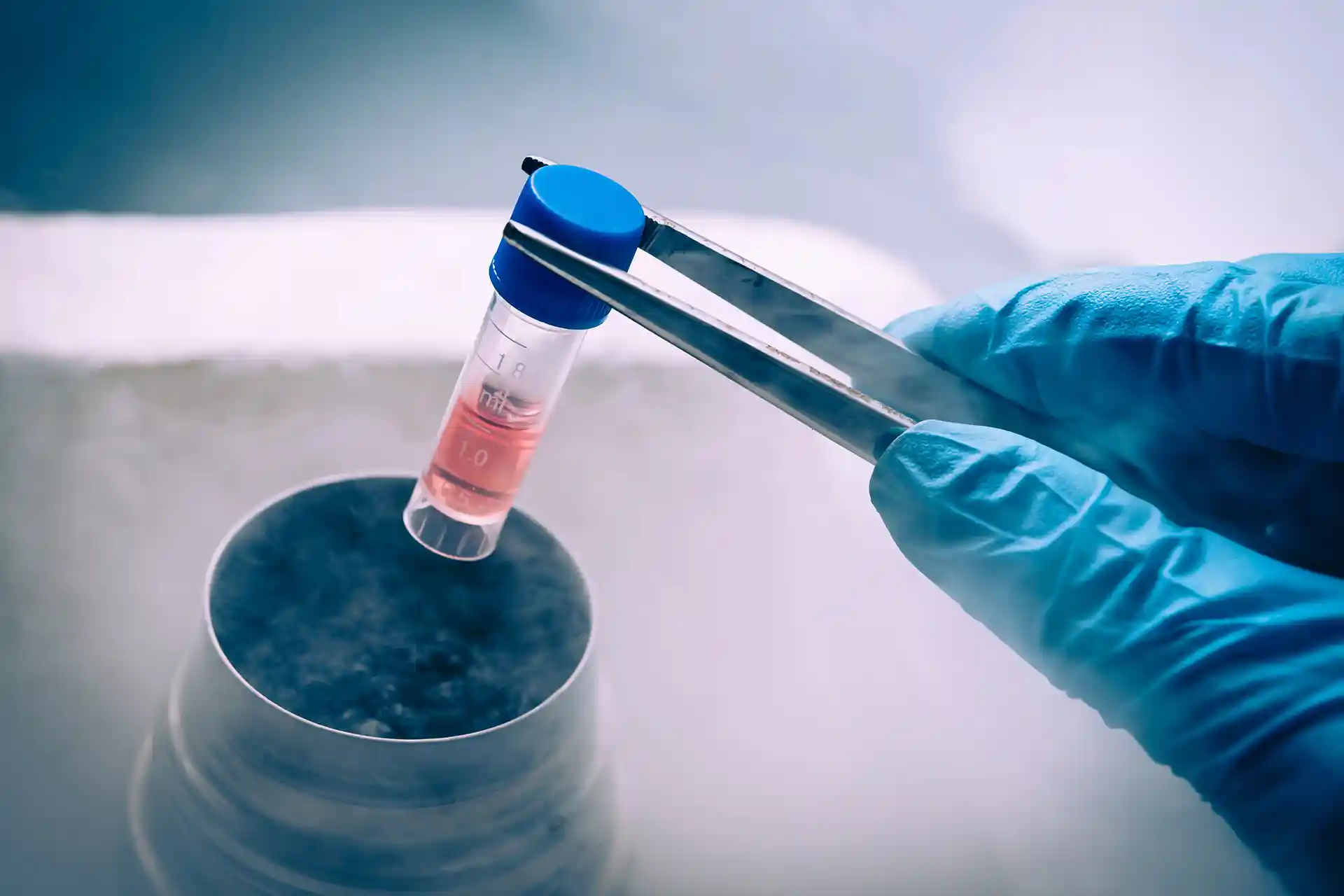
Stem cells derived from human exfoliated deciduous teeth (SHED) are a type of mesenchymal stem cell. They are obtained from naturally shed baby teeth and expanded in laboratory settings.
In a January 2026 study of newborn rats with a hypoxic ischemic brain injury, SHED given into a vein improved motor coordination, memory and learning and increased the growth of new nerve cells, even when treatment began after motor problems had already appeared (Kanzawa et al., Stem Cell Research & Therapy). Kidswell supplied the cells free of charge, and one author sits on Kidswell’s board. In the context of cerebral palsy treatment, the goal is to address the secondary effects of early brain injury (such as chronic inflammation or disrupted neural signaling) rather than reversing the original injury itself.
One of the reasons SHED cells have attracted attention is their relatively non-invasive source and their biological activity in neurological models. However, translating laboratory findings into proven clinical benefit requires carefully designed human trials. That process is ongoing.
Kidswell’s lead program is SQ-SHED, which comes from its platform for a stable supply of SHED. The human data so far come from one small study in Japan. At Nagoya University Hospital, three children aged 6 to 11 with CP (GMFCS level III) each received one infusion of SHED grown from their own baby teeth (jRCTb040230042). An interim report posted in November 2025 found no adverse events linked to the cells in the first four weeks, and GMFM-66 motor scores rose by an average of 3.2 points at 12 weeks. That report is a preprint that has not been peer reviewed, and the study had no control group (Maeda et al., Research Square).
While these findings are encouraging, they remain part of a larger development process. Regulatory approval in the United States requires comprehensive safety data, manufacturing consistency, and well-controlled clinical trials.
For families, it is essential to understand that early results do not equal guaranteed outcomes. Regenerative medicine is promising, but it must meet rigorous standards before becoming a widely available cerebral palsy treatment.
When could this treatment reach the United States?
The launch of Kidswell USA suggests that the company is preparing to initiate or expand US-based clinical development. However, cell therapies typically require several years of phased clinical trials before approval.
Parents should anticipate a timeline that includes:
FDA review and approval for US clinical trials
Phase 1 safety studies
Larger efficacy trials
Regulatory evaluation and potential approval
While exact timelines have not been publicly finalized, therapies of this type generally require multiple years of structured research before commercial availability.
Can children with CP enroll in clinical trials for stem cell?
Enrollment in clinical trials depends on regulatory approval and site availability. Any US trial of SQ-SHED would need FDA oversight before recruitment begins, and the FDA warns that anyone charged for a stem cell product, or offered one outside a clinical trial, is likely being offered it illegally. As of September 2026, ClinicalTrials.gov lists no US trial of SHED for cerebral palsy.
Families interested in stem cell therapy for cerebral palsy should consult ClinicalTrials.gov and speak with their child’s neurologist or rehabilitation specialist before pursuing any investigational treatment. Participation in legitimate clinical trials ensures ethical oversight, standardized dosing, and medical monitoring.
It is equally important to avoid unregulated clinics offering “stem cell cures” without FDA approval. Legitimate research pathways differ significantly from commercial offerings marketed directly to consumers.
Other US teams developing stem cell therapy for cerebral palsy
Kidswell is not alone in exploring regenerative strategies. Several academic centers in the United States have conducted research on umbilical cord blood and mesenchymal stem cell therapy for cerebral palsy.
At Duke University, a randomized, placebo controlled trial of 63 children aged 1 to 6 found no overall difference in GMFM-66 motor scores at one year, but children who received a higher dose of their own cord blood improved more than predicted (Sun et al., Stem Cells Translational Medicine, 2017). Other US-based research groups continue to explore mesenchymal stem cells derived from bone marrow or cord tissue.
The field of stem cell therapy for cerebral palsy is still evolving. No stem cell product is FDA approved to treat CP (FDA), though regulated trials continue.
What this means for CP families
The formation of Kidswell USA is a business step toward US clinical trials, not a treatment families can use now. As of September 2026, no US trial of SQ-SHED is listed on ClinicalTrials.gov, and the only published human results come from three children in Japan.
For families navigating cerebral palsy treatment, the most effective strategy today remains comprehensive care: early therapy, orthopedic monitoring, medication management when needed, nutritional support, and consistent developmental follow-up. Regenerative medicine may eventually add another tool to that toolbox.
In 2026, hope in cerebral palsy care lies in careful progress through registered trials, not future promises.
Sources
Kidswell Bio Corporation and Treehill Partners. Kidswell Bio and Treehill Partners launch US-based Newco to fast-track global clinical development of a novel cell and gene therapy for paediatric cerebral palsy. Press release. (February 16, 2026). Retrieved from www.kidswellbio.com
Japan Registry of Clinical Trials. A clinical trial to evaluate the safety and tolerability of stem cells from human exfoliated deciduous teeth in children with cerebral palsy (jRCTb040230042). Nagoya University Hospital. (Last modified September 11, 2026). Retrieved from jrct.mhlw.go.jp/en-latest-detail/jRCTb040230042
Maeda, T., Kanzawa, T., et al. Safety and feasibility of intravenous administration of autologous stem cells from human exfoliated deciduous teeth (SHED) in children with cerebral palsy: a first-in-human phase I clinical trial (interim analysis). Research Square preprint, not peer reviewed. (November 14, 2025). Retrieved from doi.org/10.21203/rs.3.rs-8013498/v1
Kanzawa, T., et al. Novel stem cell therapy for cerebral palsy using stem cells from human exfoliated deciduous teeth. Stem Cell Research & Therapy, 17, 44. (January 23, 2026). Retrieved from pubmed.ncbi.nlm.nih.gov/41578408/
Sun, J.M., et al. Effect of autologous cord blood infusion on motor function and brain connectivity in young children with cerebral palsy: a randomized, placebo-controlled trial. Stem Cells Translational Medicine, 6(12), 2071 to 2078. (December 2017). Retrieved from pubmed.ncbi.nlm.nih.gov/29080265/
U.S. Food and Drug Administration. Important patient and consumer information about regenerative medicine therapies. (June 3, 2021; content current as of April 8, 2024). Retrieved from www.fda.gov
Kelsey is an experienced surgical nurse with more than 10 years in hospital-based care, including leadership within the operating room. She has worked extensively with pediatric patients, refining her ability to support children and families during critical moments.
Written by
Cerebral Palsy Center
Our nurses, patient advocates and legal experts are solely focused on bringing you the latest cerebral palsy information, options for financial assistance and access to community support.