A cerebral palsy diagnosis typically occurs within a child’s first two years, though mild cases may go unnoticed until later. Understanding the process (from early screening to GMFCS levels) helps families act quickly and access the right support.
Children in the U.S. are affected by cerebral palsy
~50%
Of those with CP experience speech or language disorders
70 to 80%
Of CP cases are the spastic type, caused by motor cortex damage
How do you diagnose cerebral palsy?
Cerebral palsy isn’t diagnosed through a single test: it is a layered evaluation built on observing developmental milestones, physical assessments, and advanced imaging. The earlier the diagnosis, the sooner interventions can begin. For a deeper look at the medical standards used, see our guide on diagnostic criteria for cerebral palsy.
The diagnostic journey typically begins when parents or pediatricians notice delays in reaching motor milestones like rolling, crawling, or sitting up. Pediatricians examine muscle tone, reflexes, and motor coordination during routine checkups, flagging signs that suggest CP.
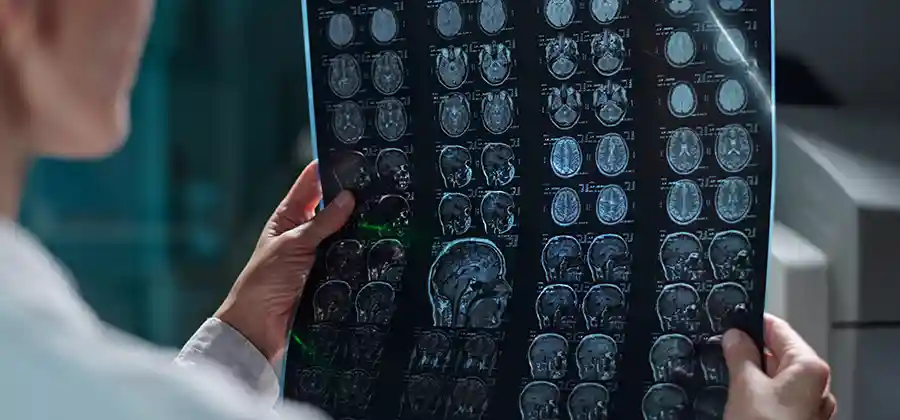
If cerebral palsy is suspected, imaging studies (primarily MRI or cranial ultrasounds) identify abnormalities in the developing brain. A definitive diagnosis then involves a team of neurologists, developmental specialists, occupational therapists, and physical therapists working together. A timely cerebral palsy diagnosis allows healthcare providers to create a customized treatment plan, maximizing your child’s potential and ensuring your family has the right support.
5 symptoms of cerebral palsy: should your child be screened?
Identifying early symptoms of cerebral palsy can be the key to a timely diagnosis, helping your child benefit from earlier interventions. While every child develops at their own pace, recognizing certain signs may signal the need for further assessment. See our guide on screening tests for cerebral palsy to understand what comes next.
Delayed milestones come first: a baby who struggles to hold their head up, roll, sit or crawl inside the expected windows. Muscle tone is the second signal and it runs in both directions, so watch for a child who feels rigid when picked up as much as one who feels floppy. Primitive reflexes that persist past the age they should fade, or jerky involuntary movements, point at the nervous system rather than the muscles. Trouble with coordination and balance, frequent falls, or visible asymmetry become clearer as a child starts moving independently. And feeding or speech difficulty, trouble swallowing, heavy drooling, delayed speech, matters most when it appears alongside the motor signs rather than on its own.
Signs your child may need a CP screening by age
0 to 6 months
Excessive floppiness or stiffness, poor head control, difficulty feeding or swallowing
6 to 12 months
Unable to roll over, persistent primitive reflexes, unusually tight or loose muscle tone
12 to 18 months
Difficulty sitting independently, dragging limbs when crawling, unusual posture or asymmetrical movement
18 months to 3 years
Delayed walking or abnormal gait, trouble grasping objects, balance and coordination issues, speech delays
No single test can deliver a definitive cerebral palsy diagnosis. It requires a combined assessment of how the brain looks, how the body moves, and how your child functions day to day. Each test brings you one step closer to understanding your child’s needs.
Imaging tests
Because cerebral palsy is what a developing brain does after injury or malformation, imaging carries real diagnostic weight. A systematic review of MRI studies in children with cerebral palsy found an abnormal scan in 86% of patients across the studies meeting full inclusion criteria, and the imaging pointed toward pathogenesis in 83%.
Magnetic resonance imaging is the reference standard, with a sensitivity of 86% to 89% for detecting risk in infancy, and it is the only test that can tell you roughly when the injury happened. Cranial ultrasound uses sound waves through the fontanelle, which makes it the workhorse in the NICU, quick and safe at the bedside and much less sensitive than MRI. CT scans give cross-sectional views and pick up calcification and old injury, but they deliver ionizing radiation and have largely been displaced by MRI in children. And an EEG records electrical activity rather than structure, so it answers questions about seizures and diagnoses no cerebral palsy at all.
Functional tests
Diagnosis does not end with imaging. What a scan shows and what a child can do are different questions, and the second one takes a team.
Audiologists and ophthalmologists establish whether a sensory problem is contributing to what looks like developmental delay, which matters because both are common in this population and both are treatable. Psychologists assess memory, learning, attention and problem-solving, and this is worth insisting on: in high-income countries roughly half of people with cerebral palsy have normal intelligence, and a child with substantial motor impairment may have no way to demonstrate it without the right supports. Genetic and metabolic testing comes in when the presentation is atypical or no structural cause turns up on imaging. A speech-language pathologist evaluates verbal and nonverbal communication. Oral-motor exams and modified barium swallow studies assess feeding safety, which is the single function most tied to long-term outcomes. Neuromuscular exams measure tone, reflexes and motor control. And gait analysis, for children who walk, guides decisions about bracing and surgery.
Will an MRI show cerebral palsy?
An MRI can often reveal brain injuries linked to cerebral palsy. While it doesn’t diagnose CP alone, it’s one of the most valuable tools in confirming or supporting a diagnosis. If you have questions, speak with a nurse today.
Cerebral palsy diagnosis by GMFCS function level
When a child receives a cerebral palsy diagnosis, one of the next steps is understanding how the condition may affect their movement and independence. The Gross Motor Function Classification System (GMFCS) gives doctors, therapists, and parents a common language for motor abilities.
GMFCS levels are determined through observation and clinical evaluation, typically soon after diagnosis. They are a snapshot of present abilities, not a prediction of potential. Intensive therapies, adaptive equipment, medical treatments, and surgeries can all enhance a child’s functional abilities and independence over time.
I
Level
Walks without limitations
May have slight balance or coordination issues when running or jumping, but generally moves independently in all environments.
II
Level
Walks with limitations
May have difficulty on uneven terrain, in crowded spaces, or with long distances. Might use railings or mobility aids in some settings.
III
Level
Walks using a hand-held mobility device
Requires a walker or crutches and often uses a wheelchair for longer distances or outdoor mobility.
IV
Level
Self-mobility with limitations; may use powered mobility
Typically requires physical assistance or specialized mobility equipment and may rely on a wheelchair full-time outside the home.
V
Level
Transported in a manual wheelchair
Has limited ability to control posture and movement voluntarily. Requires full assistance for mobility and transfers in all environments.
GMFCS levels tend to remain relatively stable over time, but they are not carved in stone. The focus should always be on helping your child reach their full potential, no matter what level they begin at. Learn more about treatment options that can improve motor function at any GMFCS level.
What doctors make a cerebral palsy diagnosis?
A cerebral palsy diagnosis often involves a team of specialists rather than a single physician, because CP affects many systems (movement, muscle control, communication), and its symptoms can vary widely. The goal is to bring multiple perspectives together for the clearest, most accurate picture of your child’s needs.
Pediatricians
First to notice early warning signs during routine checkups, delayed milestones or unusual muscle tone
Pediatric Neurologists
Brain and nervous system specialists; play a central role in evaluating symptoms and confirming the diagnosis
Developmental Pediatricians
Experts in childhood growth who assess learning, behavior, and physical coordination together
Neonatologists
Track high-risk infants closely, especially those born prematurely or with NICU stays, for early signs of CP
Physiatrists
Pediatric rehabilitation doctors focused on improving motor function and planning therapy once CP is diagnosed
Speech-Language Pathologists
Evaluate communication and feeding difficulties that often accompany motor challenges in CP
What are the keys to early diagnosis of cerebral palsy?
The earlier a cerebral palsy diagnosis is made, the sooner interventions can begin. This can make a meaningful difference in a child’s lifelong mobility, communication, and independence. But recognizing CP in its earliest stages requires knowing what to watch for. See our guide on early signs of cerebral palsy for a closer look.
Signs in infants (first year)
In the first year the signs are subtle and easy to file under normal variation. What stands out is low tone that makes a baby feel floppy, or the opposite, stiff and rigid limbs. Poor head control, or difficulty with feeding and swallowing. Rolling and pushing up on the arms arriving late. And a baby who favors one side or does not kick symmetrically.
Asymmetry is the one non-specialists notice most reliably. A strong hand preference before 12 months is not precocity, it is a reason to ask.
Signs in toddlers
Once a child starts moving independently the picture sharpens: delayed sitting, crawling or walking, toe-walking or a scissoring gait, limited coordination and frequent falls, speech delays or unclear articulation, and muscle tightness or tremor that does not resolve.
By this stage the diagnosis is usually straightforward. The point of everything above is that it no longer has to wait this long.
Key developmental milestones to watch
2 to 4 months
Holding head up independently when supported
4 to 6 months
Rolling over; grabbing and reaching out for objects
6 to 9 months
Sitting without support
7 to 10 months
Crawling on all fours
12 to 18 months
Walking independently
Understanding these timelines helps parents recognize when to ask questions and seek an early evaluation. If your child displays consistent signs, speak with your pediatrician promptly. Early intervention is the single most impactful factor in improving long-term outcomes.
Help for your child’s diagnosis
Speak with a nurse or lawyer about financial compensation that may be available for your child’s care. Get help today.
At what age is cerebral palsy detected or diagnosed?
A cerebral palsy diagnosis can be made as early as a few months old. For most children, however, signs don’t become clear until the first or second year of life. In more noticeable cases (such as those involving stiff limbs or significant movement delays) evaluations may begin as early as 4 to 6 months.
Which babies are considered high-risk for cerebral palsy?
Some infants carry enough risk that screening should be automatic rather than triggered by a concern: babies born before 32 weeks, those under 3.3 pounds at birth, infants who went through oxygen deprivation during delivery, newborns who had a brain infection or a stroke, and any baby with a long NICU stay or a traumatic delivery.
For that group the question is not whether to look but how early. Term-age MRI and the Prechtl General Movements Assessment can both be done long before a first birthday.
Doctors use standardized tools like the General Movements Assessment (GMA) or Hammersmith Infant Neurological Examination (HINE) to evaluate high-risk infants. If your child falls into any of these categories, talk to your pediatrician about early screening options. An early diagnosis connects your family to physical therapy, occupational therapy, and speech therapy at the most critical window for brain development.
What can cerebral palsy be mistaken for?
A cerebral palsy diagnosis can sometimes be delayed because early symptoms overlap with several other neurological or developmental conditions. Accurate diagnosis requires ruling out these look-alike conditions before CP is confirmed, the process clinicians call differential diagnosis.
Muscular Dystrophy
A group of genetic disorders causing progressive muscle weakness, often showing up as delayed walking or difficulty climbing stairs.
Spinal Muscular Atrophy (SMA)
A genetic condition affecting motor nerve cells in the spinal cord, leading to muscle weakness and mobility problems similar to CP.
Developmental Coordination Disorder
Children may appear clumsy or uncoordinated without the underlying brain injury characteristic of cerebral palsy.
Metabolic or Genetic Disorders
Conditions like leukodystrophy or mitochondrial diseases can mimic the motor and developmental symptoms of CP.
Autism Spectrum Disorder (ASD)
While not a motor disorder, autism can involve speech delays, coordination issues, and muscle tone differences that may initially raise CP concerns.
Mild or Undiagnosed CP
Mild CP may go undiagnosed until preschool, when motor skill differences become more noticeable compared to peers. Symptoms are often mistaken for simple clumsiness.
Your medical team will use a combination of imaging, movement assessments, and developmental evaluations to clarify the diagnosis and rule out look-alike conditions before confirming a diagnosis of cerebral palsy.
What should parents do after a cerebral palsy diagnosis?
Learning your child has been diagnosed with cerebral palsy can feel overwhelming. But with the right care, support, and planning, your child can thrive. The key is to take one step at a time, starting with a strong support system and treatment plan.
Building your child’s care plan
Treatment is assembled around a specific child rather than prescribed off a list.
Early intervention is essential: starting therapy soon after diagnosis can make a significant difference in long-term outcomes.
Finding support groups
Connecting with other parents who have shared your experience can be incredibly helpful. Look for local or national cerebral palsy organizations, online communities and parent forums, and hospital-based family support networks. Visit our support resources for a directory of organizations.
Education planning
Start conversations early with your child’s school or early intervention program. Your child may qualify for an Individualized Education Program (IEP), specialized classroom support, early educational services, and transportation accommodations.
Researching financial assistance
Caring for a child with CP can be expensive, but there are resources available. Families should explore:
Legal options for cerebral palsy diagnosed after medical errors
The time after a diagnosis can be hectic as you adjust to caring for your child. However, it’s also important to consider whether your family may be eligible to recover a substantial award from a legal claim if medical errors occurred during birth.
Every state allows someone injured by substandard medical care to seek compensation. In delivery cases the recurring failures are specific: delaying a delivery when intervention was indicated, failing to monitor for fetal distress, failing to perform an emergency cesarean in time, using excessive force, over-administering delivery medications such as Pitocin, and failing to treat an infection or jaundice.
Those are documented failures against a known standard, not bad outcomes in hindsight. What separates the two is usually the monitoring record.
Awards from a birth injury claim are often exponentially higher than the aid available through government programs, grants, and insurance, and can provide life-changing support for your child’s treatment and long-term care.
However, the time to file a claim is limited in each state. Review the statute of limitations for your state as soon as possible. Our birth injury lawyers are available 24/7 to discuss your child’s case and determine whether a claim exists.
Deadlines apply: act now
Every state has a filing deadline for birth injury claims. Don’t wait to find out if your family qualifies. Request a free case review today.
Frequently asked questions about cerebral palsy diagnosis
By combining three things rather than running one test: medical history, standardized neurological and motor assessments, and neuroimaging that agrees with them. No single result is diagnostic on its own, and a normal MRI does not rule cerebral palsy out. Where the findings converge, the diagnosis can now be made with confidence before 6 months corrected age.
No. Prenatal imaging can identify brain malformations and injuries that raise the risk substantially, and it sometimes identifies the cause years before anyone names the condition. But cerebral palsy is defined by a motor disorder, and a motor disorder cannot be observed in a fetus. The diagnosis requires seeing how the child actually moves.
There are no stages. The term does not exist clinically, and families usually encounter it from sources that have confused cerebral palsy with a progressive disease. What clinicians use instead is the Gross Motor Function Classification System, a five-level description of what a child can do: Level I walks without limitation, Level V has severely limited self-mobility. It describes function, not severity of damage, and it does not advance over time.
The underlying brain injury does not heal, so the honest answer is no. What does happen, and happens often enough to confuse the question, is that function improves substantially with therapy, and that a small number of children diagnosed early are later found to have something else, most often a genetic or metabolic condition that mimics cerebral palsy. That is a corrected diagnosis rather than a recovery, and it is one reason accurate differential work matters.
Yes, and it is more common than people assume. A child at GMFCS Level I walks independently and may look only slightly clumsy, so the motor difference gets attributed to being uncoordinated rather than investigated. Some people reach adulthood without a diagnosis and only pursue one when adult pain or fatigue prompts the question.
There is no single one, but two standardized examinations carry most of the diagnostic weight in infancy. The Prechtl Qualitative Assessment of General Movements has a sensitivity around 98% before 5 months corrected age, and the Hammersmith Infant Neurological Examination around 90%, before and after that point. Both are observational, neither requires sedation, and both are underused.
Most do far more than families are led to expect at diagnosis. In high-income countries, 2 in 3 people with cerebral palsy walk, 3 in 4 talk, and 1 in 2 have normal intelligence. Life expectancy for mild cerebral palsy tracks the general population. What varies is how much support the specific child needs, and that is what the assessments above are actually measuring.