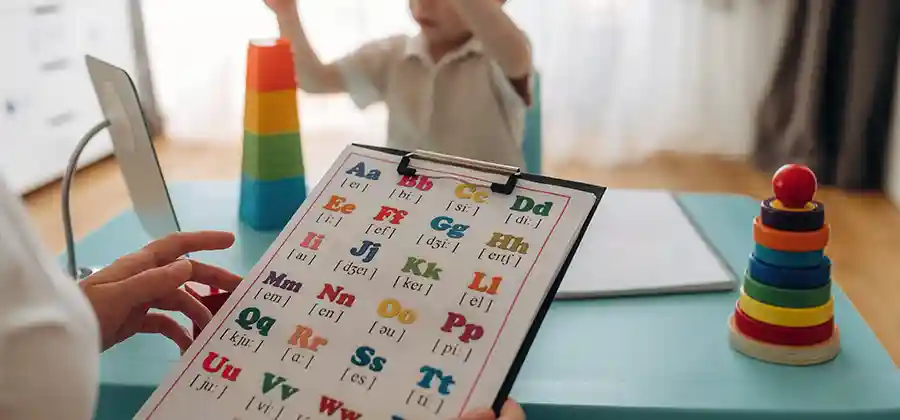
Speech therapy helps children with CP find their voice: whether that’s spoken, signed, or through technology. It addresses communication, language, swallowing, and feeding, reducing frustration while building confidence and independence at every stage of life.
Of children with CP experience speech or language challenges
4%
Of children with CP also have hearing loss requiring additional communication support
Before age 3
Starting speech therapy in the first three years delivers the greatest long-term gains
What is speech therapy for cerebral palsy?
Speech therapy is provided by speech-language pathologists (SLPs) who work with children and adults experiencing difficulties with speaking, understanding language, or swallowing. In cerebral palsy, these issues stem from how the condition affects muscle control in the face, tongue, and throat.
Speech therapy is a broad specialty. For children with CP it covers:
Speech clarity: Improving pronunciation, articulation, and vocal quality so the child can be understood in everyday settings
Language therapy: Building vocabulary, grammar, and sentence structure for clearer communication
Augmentative and alternative communication (AAC): Introducing tools like communication boards, tablets, or speech-generating devices when spoken language is especially difficult
Swallowing and feeding therapy: Strengthening muscles to improve safe chewing, swallowing, and eating
Speech therapy may also target breathing control, oral muscle tone, and coordination, all vital not just for speech but for safe eating and reducing the risk of aspiration. It complements physical therapy and occupational therapy as part of a complete CP care plan.
Yes, decades of research and clinical experience confirm that speech therapy can be transformative for children with CP. The benefits vary from child to child, but nearly every child gains something meaningful from consistent, targeted therapy.
Speech therapy for CP delivers:
Improved communication: Even small gains in speech clarity make a significant difference at school and at home
Reduced frustration: When children can better express needs and feelings, tantrums and stress often decrease noticeably
Social connection: Communication skills foster friendships, classroom participation, and family bonding
Independence: For children who use AAC, learning to navigate a device can mean the freedom to order food at a restaurant or tell a teacher when they need help
One of the most consistent findings in research is that early intervention delivers the best outcomes. Children who start therapy before age three show greater long-term progress in both language and speech clarity compared to those who begin later. That said, gains are possible at any age. It’s never too late to start.
Common speech disorders in cerebral palsy
The most common speech disorder linked to CP is dysarthria, but the range of communication challenges is broad. Understanding which disorder your child has helps the SLP design the most targeted treatment plan. For tracking progress against typical patterns, see our guide on speech therapy milestones for CP and the deeper view of CP and language development.
Dysarthria
The most common. Weak, stiff, or uncoordinated muscles in the mouth and face cause slurred, monotone, or unusually rhythmed speech. Severity ranges from mild to profound.
Apraxia of Speech
Difficulty planning and sequencing the movements needed for speech, even when muscle strength is adequate. The child knows what they want to say but the motor plan breaks down.
Resonance Disorders
When muscle weakness affects the soft palate, speech may sound overly nasal (hypernasality). Therapy and sometimes surgery address this.
Expressive Language Delays
Difficulty putting words together into sentences or phrases. The child may understand more than they can express.
Receptive Language Delays
Trouble understanding what is said. The child may struggle to follow directions or answer questions even with adequate hearing.
Dysphagia (Swallowing)
Swallowing disorder affecting safe eating, the same oral motor muscles used for speech control chewing and swallowing. Aspiration risk makes this a safety priority.
Not all children with CP have speech challenges
The severity of speech difficulties ranges widely, from mild articulation issues to significant reliance on AAC devices. Some children with CP have no speech challenges at all. Early screening by a speech-language pathologist helps identify whether therapy is needed and at what level.
What speech therapy exercises are used for cerebral palsy?
Speech therapy for CP is highly individualized, but several core techniques are used consistently. The goal is not only to improve mechanics but to make communication functional, with the right therapy tools matched to the child’s needs. For practical at-home strategies, see how to improve speech in CP.
The therapy targets four core areas
SLPs tailor each session to the child, but every plan works across the same fundamentals: oral motor control (strength in the lips, tongue, and jaw), breath support (controlled airflow for louder, clearer speech), articulation and language (clear sounds and functional vocabulary), and feeding and swallowing safety when needed.
For children who can't yet produce clear speech, therapy also incorporates AAC — communication boards, tablets, or eye-gaze devices that give the child an immediate way to be understood.
Common SLP techniques
1
Oral motor exercises — blowing bubbles, drinking through straws, or using whistles to strengthen lips, cheeks, and tongue muscles
2
Breath support training — controlled breathing exercises, often with tools like pinwheels, to support louder and clearer speech
3
Repetition drills — repeating words, syllables, or phrases to improve coordination, rhythm, and motor planning
4
Play-based therapy — songs, rhymes, and storytelling games that keep children engaged while targeting specific sounds and language goals
5
AAC practice — learning to navigate device menus, use eye-gaze technology, or combine words into sentences using communication boards or tablets
6
Feeding and swallowing exercises — practicing chewing different textures, safe swallowing sequences, and posture adjustments that reduce aspiration risk
How early can you start speech therapy for cerebral palsy?
Speech therapy can begin as early as infancy. Even before a baby is speaking, therapy may focus on early feeding, oral reflexes, and pre-verbal communication skills, laying the groundwork for language development. See our deeper guide on speech therapy for toddlers with CP.
Birth–2 yrs
Feeding, oral reflexes & pre-verbal skills
Therapy targets sucking, swallowing, and early babbling. Parents are coached on stimulating communication through gestures, sounds, and interactive play.
2–5 years
First words, phrases & clear sounds
Often the most intensive window. Children work on forming first words, combining them into phrases, and practicing clear articulation. AAC is introduced if needed.
School age
Classroom participation & literacy
Therapy shifts toward classroom communication, reading readiness, and social interaction with peers. AAC device fluency and independence become priorities.
Teen & adult
Independence, social communication & career
Goals include preparing for independence: ordering food, job interviews, managing social communication. Maintaining skills and adapting AAC as technology evolves.
How often is speech therapy needed?
Frequency depends on the child’s age, severity of communication challenges, and available resources. Research shows consistency matters more than session length: short, frequent practice beats long, infrequent sessions.
Early Intervention
2–4x / week
Toddlers and preschoolers with significant needs. Most intensive phase.
School Age
1–2x / week
Often through school services via IEP, supplemented by home practice.
Home Practice
10–15 min / day
Daily activities with parents. Research shows home practice dramatically improves progress.
How does speech therapy change over time?
Speech therapy for CP evolves just like physical therapy or education plans: adapting to the child’s stage of life, challenges, and opportunities. The key is that therapy never stands still.
As technology advances, more children and adults with CP are using AAC devices, from simple picture boards to sophisticated eye-gaze systems that can be operated with just a glance. A child who once struggled to be understood may grow into an adult who communicates independently and confidently through technology.
Families should expect therapy goals to shift significantly as the child grows. What the SLP targets at age 2 will look very different from the goals at age 12 or 22. The constant thread is building the child’s ability to connect, express themselves, and participate fully in their world.
Is speech therapy for CP covered by Medicaid?
In most U.S. states, Medicaid covers speech therapy for children with CP when deemed medically necessary. Coverage typically includes early intervention, school-based services, and outpatient or hospital-based sessions.
Early Intervention (birth to age 3) — state-funded programs provide therapy at little or no cost; no Medicaid enrollment required in most states
School-based services (ages 3–22) — therapy provided through an IEP under IDEA; Medicaid often partners with public schools to fund these sessions
Outpatient or hospital-based therapy — covered when medically necessary, particularly for feeding and swallowing disorders
Private insurance — most plans cover speech therapy with a referral; verify annual session caps and prior authorization requirements
Coverage rules vary by state. Check state Medicaid websites for eligibility, whether prior authorization is required, and any annual hour limits. For families where coverage falls short, a birth injury legal claim can fill the gap. See our disability benefits guide for a full overview of available funding sources.
Help funding speech therapy
A birth injury award can cover years of speech therapy, AAC devices, and communication technology. Get a free case review to find out if your family qualifies.
Other therapies recommended alongside speech therapy
Speech therapy rarely stands alone. Children with CP benefit most from a multidisciplinary approach that combines therapies targeting different aspects of development.
Physical therapy — improving posture and trunk strength indirectly supports breath control and speech projection
Occupational therapy — fine motor skills and hand function support AAC device use, writing, and school participation
Feeding therapy — some SLPs specialize in feeding and swallowing; occupational therapists may also contribute to mealtime safety and independence
Assistive technology services — specialists match children with the right AAC devices, software, and mounting systems that complement speech therapy
Behavioral or psychological support — for older children who experience frustration or anxiety related to communication barriers
Medications — in some cases, managing spasticity or drooling with Botox or anticholinergics can improve oral motor function
Whether a child learns to speak more clearly, finds their voice through AAC, or gains confidence in expressing themselves, every step forward in speech therapy builds a foundation for greater independence and inclusion. Starting early and staying consistent are the most important things a family can do.
Frequently asked questions about speech therapy for CP
It is never too late. While starting early (ideally in the toddler or preschool years) gives children the best chance at long-term progress, older children, teens, and adults with CP can still benefit significantly. Therapy goals simply change with age: younger children focus on learning sounds and building words, while older individuals refine clarity, master social communication, or expand AAC device use. The brain remains adaptable throughout life.
Research consistently shows speech therapy improves communication for children with CP. For some, success means clearer pronunciation; for others, it means confidently using an AAC device. The biggest gains come when therapy starts early, is tailored to the child’s specific needs, and is reinforced with consistent home practice. Even small improvements can reduce frustration, boost independence, and help children participate more fully in school and family life.
Private speech therapy sessions average $75 to $250 per hour in the U.S. without coverage, which adds up quickly. However, many children qualify for Early Intervention programs (birth to age 3) at little or no cost. Public schools often provide therapy through an IEP. Medicaid and many private insurers cover speech therapy when medically necessary. A birth injury legal claim can also be a primary funding source for families who still face gaps after government and insurance coverage.
Signs your child may benefit from speech therapy include: trouble pronouncing words clearly by age 3 or 4; difficulty chewing, swallowing, or safely managing food; speech that sounds slurred, nasal, or monotone; limited vocabulary compared to peers; or frustration when trying to communicate. Talk to your pediatrician, a referral to a speech-language pathologist can determine whether therapy is needed and at what level.
Dysarthria is the most common speech disorder linked to CP. It occurs when weak, stiff, or uncoordinated muscles in the mouth and face affect speech production: causing slurred, monotone, or unusually rhythmed speech. Other common challenges include apraxia of speech, resonance disorders, expressive and receptive language delays, and dysphagia (swallowing disorder).
Early intervention typically involves 2 to 4 sessions per week. School-age children often receive 1 to 2 sessions per week through school services. Daily 10 to 15 minute home practice activities dramatically improve progress between sessions. Research shows consistency matters more than session length, a child who practices short, frequent exercises typically makes more progress than one who attends longer sessions but rarely practices at home.