Breakthrough Wearable Offers Lightweight Mobility for Children with Cerebral Palsy
6/5/2025
Reviewed by: Cerebral Palsy Center Editorial Team
Breakthroughs happen at the intersection of compassion, technology, and innovation. The MyoStep, a groundbreaking lightweight wearable exoskeleton developed specifically for children with cerebral palsy, represents exactly this type of convergence.
Researchers from the University of Houston’s NSF-funded BRAIN Center announced the MyoStep last week. It is the culmination of a years-long joint effort to advance pediatric mobility aids.
Cerebral palsy (CP), affecting motor function in approximately 3 out of every 1,000 children born, poses significant barriers to independence, social engagement, and personal confidence. Traditional exoskeletons, often bulky and rigid, limit practical daily use and comfort. In contrast, the MyoStep offers an elegantly designed alternative: flexible, lightweight, and discrete.
“"Researchers from the University of Houston's NSF-funded BRAIN Center announced the MyoStep last week. It is the culmination of a years-long joint effort to advance pediatric mobility aids."”
— Chris Schroeder, Esq
Breakthroughs happen at the intersection of compassion, technology, and innovation. The MyoStep, a groundbreaking lightweight wearable exoskeleton developed specifically for children with cerebral palsy, represents exactly this type of convergence.
Researchers from the University of Houston’s NSF-funded BRAIN Center announced the MyoStep last week. It is the culmination of a years-long joint effort to advance pediatric mobility aids.
Cerebral palsy (CP), affecting motor function in approximately 3 out of every 1,000 children born, poses significant barriers to independence, social engagement, and personal confidence. Traditional exoskeletons, often bulky and rigid, limit practical daily use and comfort. In contrast, the MyoStep offers an elegantly designed alternative: flexible, lightweight, and discrete.
Innovative Design, Smart Technology
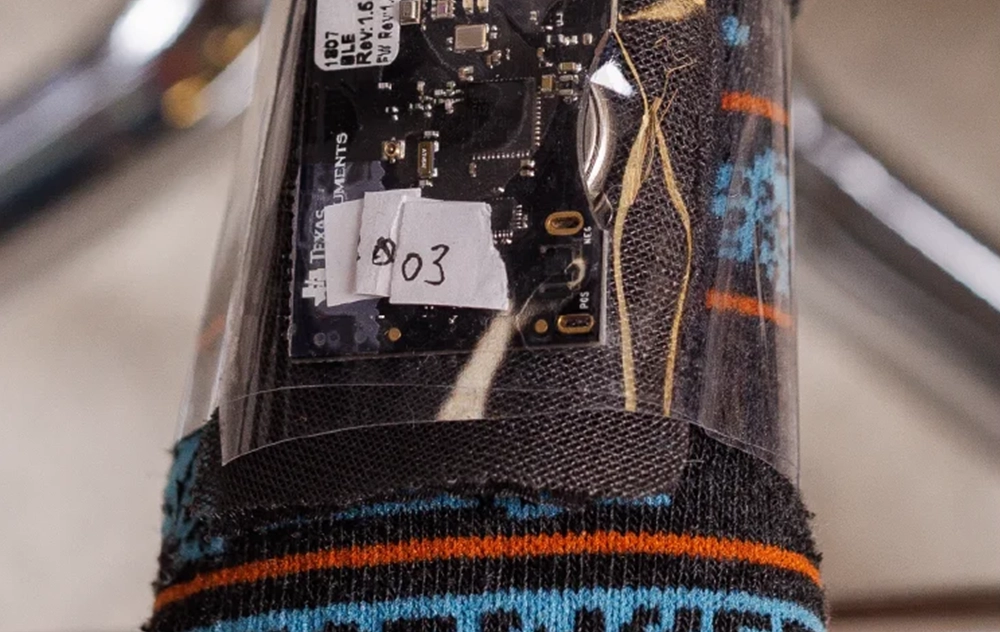
Crafted with smart fabrics and artificial muscle technology, MyoStep integrates seamlessly into daily life. It supports children’s movements in real-time, harnessing a wireless Bluetooth sensor network that continuously collects and processes motion data.
This adaptive responsiveness means the exoskeleton intuitively assists exactly when and how it's needed, enhancing mobility and encouraging natural movements.
“The MyoStep project represents a significant advancement in the field of pediatric mobility aids, particularly for children with cerebral palsy,” said Jose Luis Contreras-Vidal, director of the NSF BRAIN Center and Distinguished Professor of Electrical and Computer Engineering.
“By integrating cutting edge technologies such as artificial muscles, smart fabrics, and a comprehensive sensor network, MyoStep offers a promising solution to the challenges faced by existing exoskeletons,” he said.
Safety remains a priority, with built-in temperature monitors and emergency shut-off features ensuring comfort and protection against skin irritation or overheating. All electronic components and actuators are securely separated from direct skin contact, further minimizing discomfort and risk.
Child-Centric Adaptability
MyoStep’s thoughtful design accounts for the realities of growth and daily activities. It adjusts easily to children's changing bodies, providing continuous support without interruption or replacement.
By specifically targeting coordination in ankles, knees, and hips, it reduces energy demands, empowering children to walk more efficiently, confidently, and independently.
“Although exoskeletons offer some degree of assistance and stability, they often prove impractical for regular daily use… These devices typically fail to accommodate a child’s growth and remain too heavy. By integrating cutting edge technologies such as artificial muscles, smart fabrics, and a comprehensive sensor network, MyoStep offers a promising solution to the challenges faced by existing exoskeletons.” said Contreras-Vidal.
The Power of Cross-Disciplinary Collaboration
Behind MyoStep stands a diverse and expert team led by researchers at the University of Houston’s NSF-funded Building Reliable Advances and Innovation in Neurotechnology (BRAIN) Center, in partnership with TIRR Memorial Hermann. Specialists across biomechanics, orthopedic surgery, industrial and costume design, electrical and mechanical engineering collaborated to bring the vision of MyoStep to life.
Embracing Future Potential
Traditional exoskeleton technologies have long struggled to replicate the natural strength and agility of human muscle without cumbersome weight. MyoStep bridges this gap, showing how compassionate innovation can radically transform the lives of children with cerebral palsy, providing them not only greater physical capability but also improved self-esteem and a sense of freedom.
As technology continues to evolve, innovations like MyoStep are setting new standards, demonstrating clearly how focused, thoughtful design can enhance quality of life, one step at a time.
Cerebral Palsy Center will continue to monitor the development of MyoStep for updates on availability to the public.
Sources:
Fickman, L. UH BRAIN, TIRR Memorial Hermann Develop First Wearable Pediatric Soft Exoskeleton Made Of Smart Materials. University of Houston. (April 29, 2025).
Our nurses, patient advocates and legal experts are solely focused on bringing you the latest cerebral palsy information, options for financial assistance and access to community support.
Written by
Cerebral Palsy Center
Our nurses, patient advocates and legal experts are solely focused on bringing you the latest cerebral palsy information, options for financial assistance and access to community support.