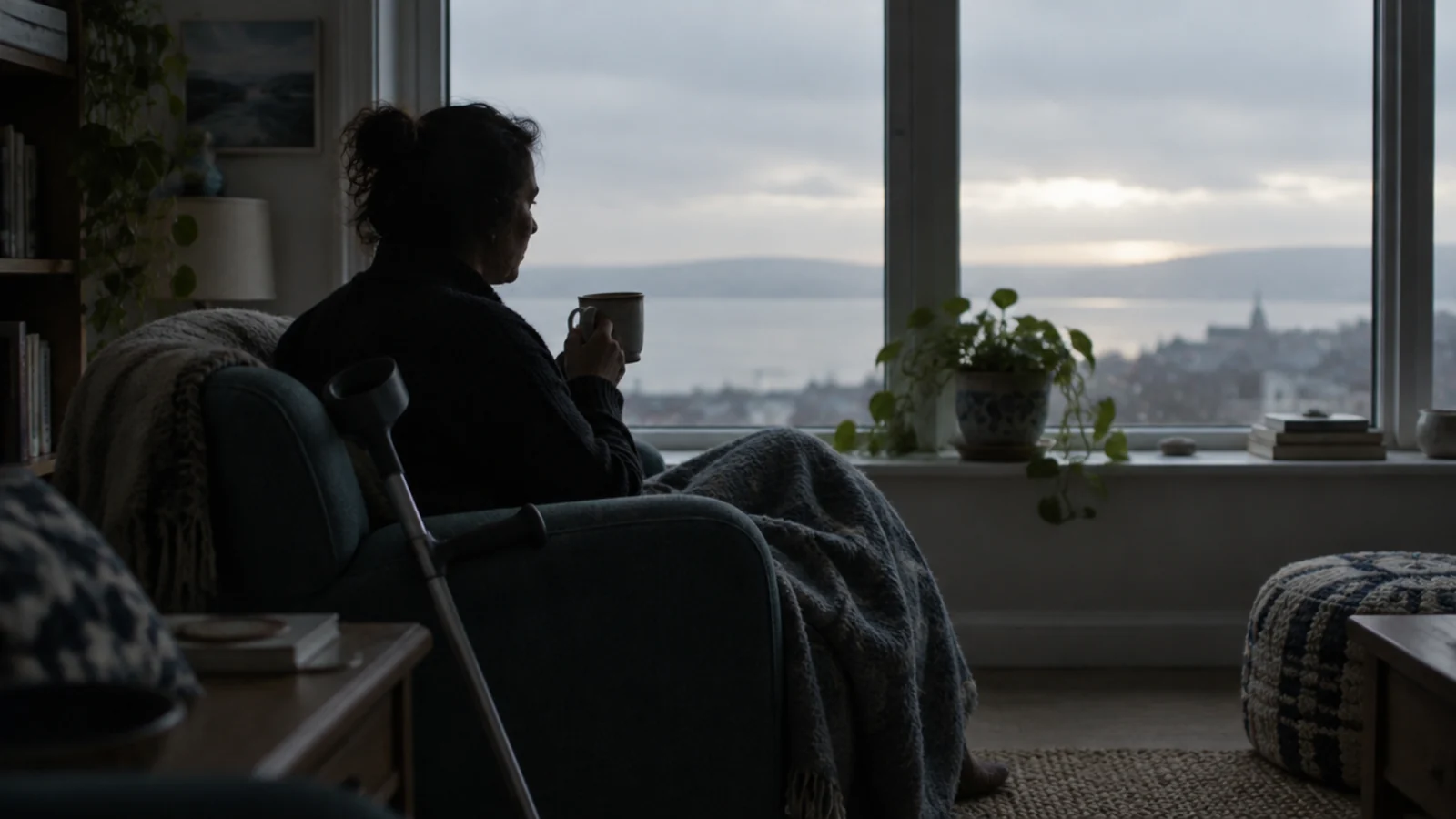
Cerebral palsy is treated as a childhood condition by almost everything written about it, including a good deal of this site. Then children grow up, and the problem that dominates adult life turns out to be one nobody prepared them for: being tired in a way that rest does not fix.
Walking with cerebral palsy can cost several times the energy it costs someone else. Add pain, spasms and broken sleep, and the arithmetic of an ordinary day stops working somewhere around mid afternoon.
A study published in Disability and Rehabilitation on April 27, 2026 tested whether adults could manage this themselves, with two self-guided programs and no therapist in the room.
“Self-guided neurocognitive rehabilitation is feasible for adults with CP and shows promise for managing fatigue.”
— Disability and Rehabilitation, April 2026
What the study did
Twenty-two adults took part, with a mean age of 44, most of them at GMFCS levels I to III. They worked through two self-guided neurocognitive rehabilitation modules, one aimed at fatigue and one at sleep, with the option of professional support layered on if needed.
Seventeen of the 22 finished both modules on their own. That completion rate is the headline feasibility result, and for a self-guided program it is a decent one.
What moved and what did not
Fatigue improved, most clearly in the early mornings, tracked through real-time monitoring rather than a single questionnaire at the end. Sleep quality stayed where it started.
Satisfaction averaged 6.5 out of 10, which the researchers themselves flagged as below the threshold they had set. They published that anyway, and reporting a program that missed its own bar is more useful to an adult deciding how to spend their energy than another paper announcing a success.
What adults with CP say about this themselves
A qualitative study in the same journal gathered the experiences of adults with cerebral palsy around sleep and physical activity. The themes were consistent: pain, spasms, sensitivity to noise and light, and fatigue arriving earlier in the day as people aged. Motivation was not the missing piece. Support was.
The authors recommended that services teach adolescents about sleep and activity before these changes arrive, rather than leaving young adults to work it out after the pediatric team has discharged them.
What to do with this now
Raise fatigue at your next appointment as a symptom, not as a complaint about being busy. Ask whether pain, spasticity or sleep apnea is driving it, since each has its own treatment. Track when the tiredness lands rather than how bad it feels, because a pattern is easier to act on than a rating.
And if you are the parent of a teenager with cerebral palsy, this is the conversation worth having early.