The federal budget law signed on July 4, 2025 (Public Law 119-21, known as H.R. 1 or the One Big Beautiful Bill Act) will reduce federal Medicaid spending by about $911 billion over ten years, according to Congressional Budget Office estimates as summarized by KFF in July 2025. Most of the Medicaid changes start between now and 2028.
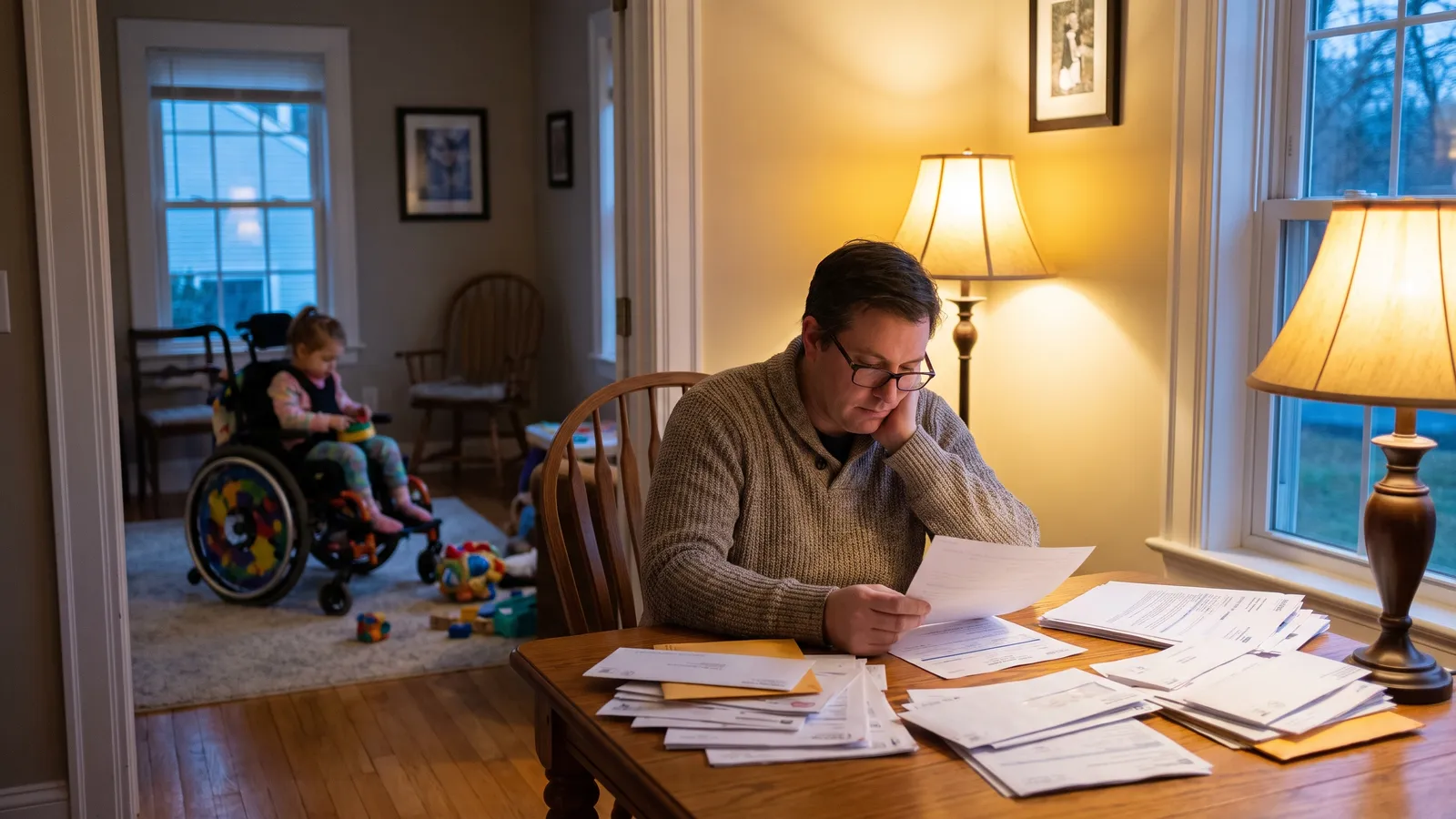
For many families of children with cerebral palsy, Medicaid pays for therapy, wheelchairs, nursing and home aides. Many adults with CP rely on it for personal care. Some changes come straight from the federal law. Others come from state budgets, because most Medicaid home care is optional for states.
Below are the federal dates, the groups the new work rule exempts, and what New York, Colorado and Connecticut did with their programs in 2026.
“States are required to cover nursing facility care under Medicaid, but nearly all home care (HCBS) is optional.”
— KFF, Health Provisions in the 2025 Federal Budget Reconciliation Law, Aug 2025
The federal dates
- By January 1, 2027: adults ages 19 to 64 in the Affordable Care Act Medicaid expansion must show 80 hours a month of work, school or community service, or qualify for an exemption.
- Renewals from December 31, 2026: expansion adults are rechecked every 6 months instead of every 12.
- January 1, 2027: retroactive coverage (payment for bills from before applying) drops from up to 90 days to two months, or one month for expansion adults.
- October 1, 2027: expansion states begin lowering their cap on provider taxes, a source of state Medicaid money, until it reaches 3.5% in 2032.
Who is exempt from the work rule
The rule covers expansion adults, not children or people enrolled through SSI. It exempts people who are medically frail, which includes people with a physical or developmental disability, and parents and family caregivers of a child 13 or younger or of a disabled individual. A CMS rule issued June 1, 2026 adds that the condition must significantly impair the person’s ability to work, judged first from the past 12 months of medical claims.
What states changed in 2026
Home and community based services (HCBS), the supports that let people get care at home, are mostly optional for states.
- New York: CMS approved an amended Children’s Waiver effective April 1, 2026. It drops day habilitation and points families to community habilitation for the same daily living skills.
- Colorado: a budget signed May 8, 2026 adds soft caps on some personal care hours and cuts most provider rates 2%. From July 1, the adult developmental disabilities waiver enrolls one person for every two who leave (Developmental Pathways).
- Connecticut: a plan to convert Community First Choice, a home care program used by more than 7,000 residents, into a waiver was withdrawn in April 2026 (CT Mirror).
Federal home care rules on hold
A grievance system for home care complaints was due July 9, 2026. On February 26, 2026, CMS said it does not expect to enforce it before December 31, 2027. A separate requirement that 80% of personal care payments go to worker pay starts in 2030.
What families can do
Changes arrive as written notices, at least 10 days before a reduction. A fair hearing (an appeal to a state hearing officer) can be requested within the state’s deadline of up to 90 days, and services continue if it is requested before the change starts. Every state has a Protection and Advocacy agency for disability legal help. Our disability benefits guide covers SSI and Medicaid basics.