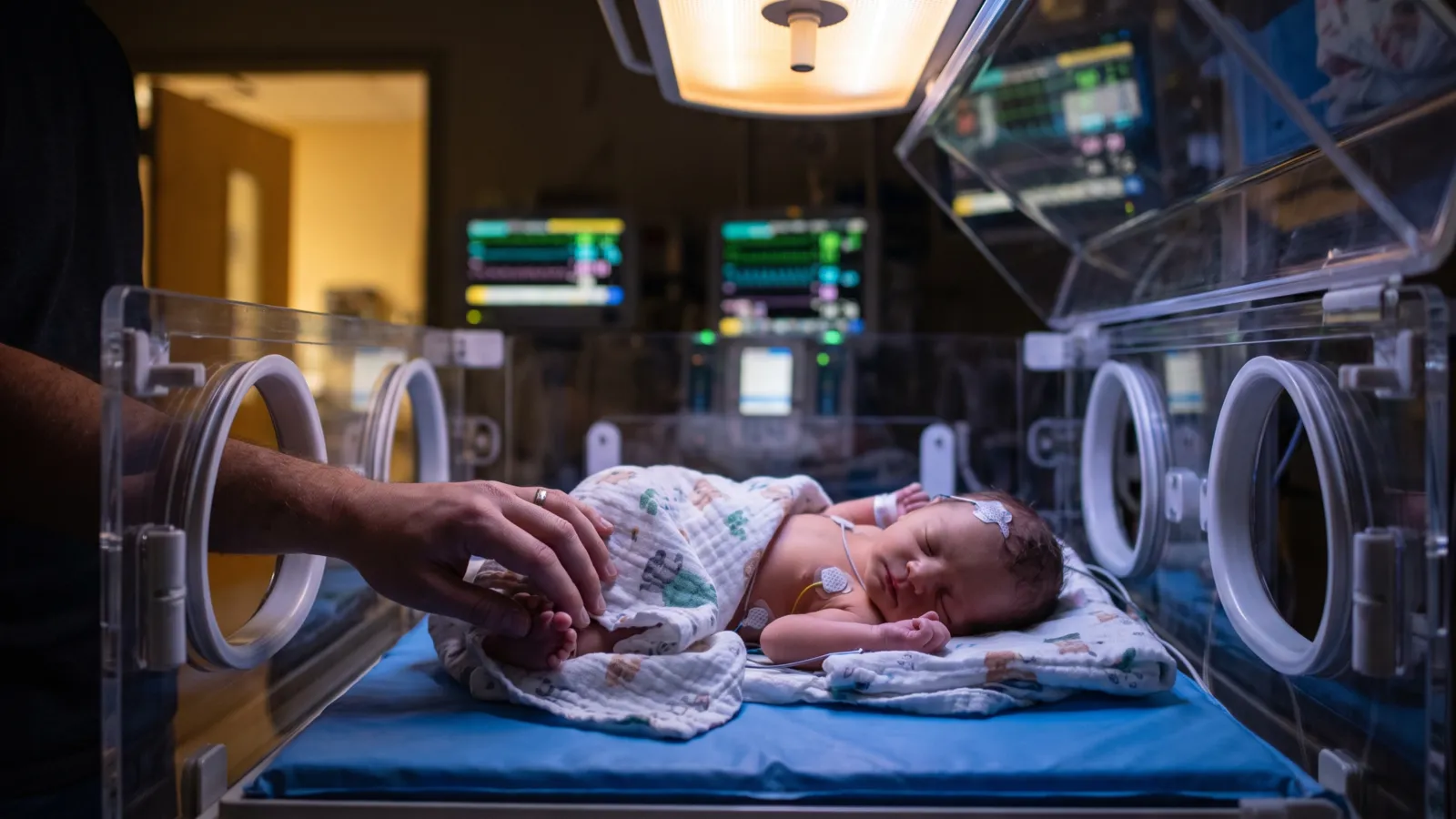
On April 2, 2026, the Cochrane Library published an updated review on a question many NICU families have heard raised: can melatonin, the hormone that helps regulate sleep, protect a newborn’s brain after it was starved of oxygen around birth?
The review team, led by Tim Hurley of Trinity College Dublin, searched for every randomized trial on the question through August 18, 2025. They found four, with 155 babies in total. Their conclusion was blunt. The evidence is of very low certainty, so they could not say whether melatonin helps.
That answer matters because the brain injury in question, hypoxic ischemic encephalopathy (HIE), is one known cause of cerebral palsy. Below is what the trials tested, what they found, and where melatonin sits among the other add-on treatments doctors are studying.
“Overall, the evidence to date for melatonin treatment in neonatal encephalopathy is uncertain, and larger randomised trials are urgently required.”
— Hurley T et al., Cochrane Database of Systematic Reviews, April 2026
Why researchers are looking past cooling
The standard treatment for moderate to severe HIE is therapeutic hypothermia, or cooling. Doctors lower the baby’s body temperature for 72 hours, starting within six hours of birth. It lowers the risk of death or disability, but the Cochrane authors call it “only partially effective.”
Researchers are testing drugs to give alongside it. Melatonin is one. In animal studies it calms inflammation and mops up harmful molecules called free radicals.
What the 2026 Cochrane review found
The four trials were small, with 20 to 80 babies each. Two (55 babies) gave melatonin together with cooling. Two (100 babies) gave melatonin without cooling. The review judged them at low risk of bias. Size was the problem.
- Only one trial, a pilot study of 25 babies, followed children to 18 months to measure death or disability, the outcome that matters most.
- In the two trials without cooling, fewer babies died in the first month in the melatonin groups. The review still rated this evidence very low certainty.
- Brain MRI scans in the first month showed no clear difference in injury to the deep brain areas called the basal ganglia and thalamus.
A larger University of Florida study of melatonin with cooling (NCT02621944) is still recruiting, with completion estimated for March 2027.
Other add-on treatments under study
Erythropoietin, a hormone that helps make red blood cells, once looked promising. The HEAL trial, published in the New England Journal of Medicine in July 2022, gave it or a placebo to 501 cooled infants. Death or impairment occurred in 52.5% of the erythropoietin group and 49.5% of the placebo group. It did not help and brought more serious side effects.
Caffeine citrate is another candidate. A 2024 phase 1 safety trial gave it to 17 cooled infants and found it well tolerated. In August 2026, researchers writing in JAMA Pediatrics argued that more animal work is needed before larger caffeine trials begin.
A baby’s own umbilical cord blood is also being tested. A 2014 Duke University study gave fresh cord blood cells to 23 cooled infants and found the process feasible. A placebo-controlled follow-up trial of 35 infants finished in 2019.
A hospital research drug, not a home supplement
In every trial in the review, melatonin was given to newborns in a hospital, by neonatal teams, under a research protocol. None of the trials tested melatonin given at home. Parents whose baby is being cooled can ask the care team whether any clinical trials are open at that hospital.