Home›News›Shriners and Formula 1 join forces to fulfill drea...
Shriners and Formula 1 join forces to fulfill dream of fan with CP
11/21/2025
Reviewed by: Cerebral Palsy Center Editorial Team
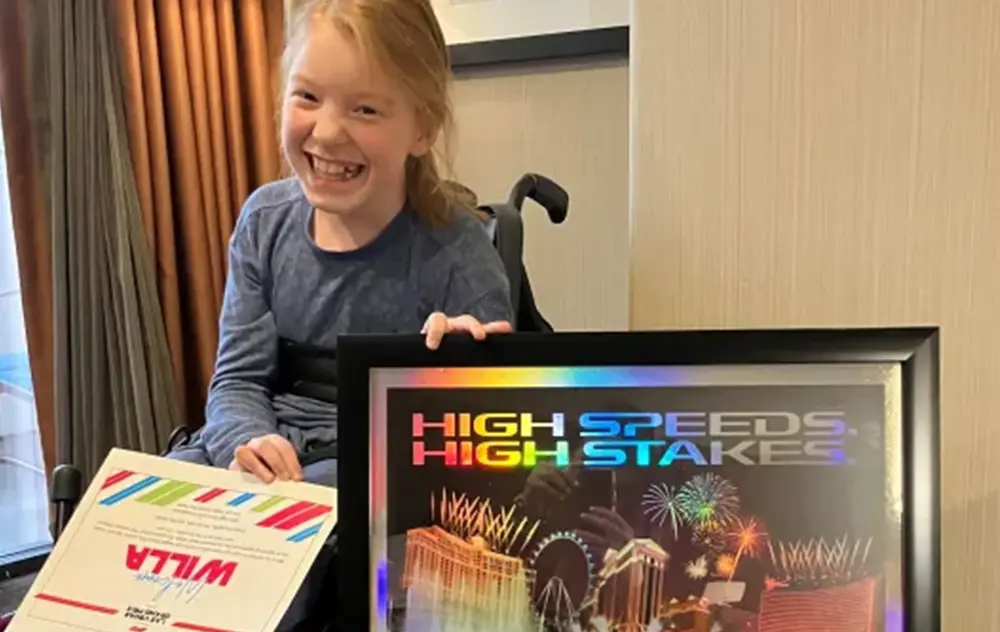
When a child?s life is shaped by cerebral palsy or another birth-related brain injury, moments of joy and normalcy become especially meaningful. For nine-year-old Willa?who uses a wheelchair daily and receives care for cerebral palsy diagnosis at Shriners Children?s Salt Lake City?one surprise changed everything.?
Thanks to the combined efforts of Shriners staff and the world of Formula One, Willa?s passion for racing turned into a dream-come-true experience that extends far beyond fandom. Her story offers hope, joy and inspiration for families navigating cerebral palsy diagnosis. Cerebral Palsy Center is happy to share the story originally published by Salt Lake City?s ABC4.
“"Our goal is to help our patients understand that there are no limitations to what they can accomplish"”
— Shriners
In late 2024, the team at Shriners Children?s Salt Lake City decided to make Halloween special for Willa. Staff transformed the hospital area into a racing pit-lane fantasy just for her, complete with race-car decorations, driver suits, checkered flags and a specially-designed wheelchair ramp that looked like the starting grid.?
According to the ABC4 report: ?Nine-year-old Willa ? is experiencing the thrill of a lifetime.? The surprise was captured in video, showing Willa?s bright smile and wide eyes when she was welcomed into this motor-sports themed celebration.
Even in a hospital environment filled with therapy sessions and medical routines, Shriners staff paused to recognise Willa?s personal dream. They took the time to customise her experience, not just as a patient, but as a young fan whose love of racing promised a big moment.
Word of Willa?s surprise spread quickly. Photos and videos posted by Shriners and local media caught the attention of fans worldwide. One Instagram reel noted: ?We aren?t being dramatic when we say Willa is @oscarpiastri?s biggest fan?? Suddenly this local hospital celebration became a viral moment of inclusion and joy. Social-media shares amplified the story, drawing in the global racing community.
In the days following, messages poured in?fans applauded Willa?s courage, the hospital?s creativity, and the way a simple story highlighted what matters: inclusion, representation, and making a child feel valued. Many parents of children with CP wrote to express the emotional impact: here was a child who could focus on joy, not just treatment.
As the story spread, the world of Formula One took notice. Through its partnership with the charity Make‑A‑Wish, F1 had already pledged to ?grant life-changing wishes to children and their families when they need it most.? In 2023, F1 announced it would invite eligible children and families into paddocks and behind the scenes at race weekends.?
With Willa?s story reaching team social-channels, F1 officials and drivers reached out inviting her to one of its marquee events. The partnership between F1 and Make-A-Wish helped accelerate those connections and generate a bespoke experience for her.
Formula One driver Oscar Piastri personally engaged with Willa?s story and sent a gift package that included a signed helmet and pit-crew t-shirt. The racing community rallied around her, recognising that a cerebral palsy diagnosis should never limit a child?s fandom or dreams.
In March 2025 the ultimate invitation arrived: Willa and her family were invited to the 2025 Las Vegas Grand Prix race, which takes place this weekend. For a child who uses a wheelchair and manages therapies related to a cerebral palsy diagnosis, the logistical challenge is real?but thanks to the event organisers and Shriners staff, the trip was made accessible, inclusive and joyous.?
Willa entered the paddock like a professional guest, wearing a mini race-suit, meeting mechanics and climbing into a mock race-car. The multi-day experience featured private pit-walks, media-friendly photo-ops and VIP seating adapted for her needs. For her family, the invitation became more than a day out?they felt seen and supported as part of the racing community.
When Willa met Oscar Piastri, the moment became unforgettable. The young driver knelt beside her wheelchair, asked what car she admired most and listened carefully as she explained her favourite racing moment. He pulled out the signed helmet and said: ?Thanks for being my biggest fan.? Willa?s mother later reflected, ?Seeing her face light up when he handed her the helmet?she felt like she belonged in that pit lane.??
This interaction, photographed widely, symbolised more than a gift: it reflected inclusion, respect and the power of shared interests transcending physical limitations.?For Willa, who lives with a birth-related brain injury and a cerebral palsy diagnosis, meeting a hero in a context that didn?t focus on medical support but on shared fandom was transformative.
Shriners Children?s hospitals are widely recognized for specializing in care for children with conditions like cerebral palsy, offering multidisciplinary teams combining orthopedics, physical/occupational therapy, motion-analysis labs and individualized care plans. According to Shriners, ?our team of specialists provides individualized care for your child with cerebral palsy (CP), from mild cases ? to more complex diagnoses?.?
Their mission emphasises hope: ?Our goal is to help our patients understand that there are no limitations to what they can accomplish?
Beyond clinical care, Shriners places strong emphasis on emotional support, recreation, and helping families participate fully in life?whether that means sports, swimming, or even racing- themed surprises like Willa?s. Their outreach and patient-stories illustrate how children with brain-injury diagnoses can thrive with the right support.
Shriners? commitment to holistic care includes wish-making and recreational breakthroughs. In 2024 the story of Claire at Shriners Children?s Northern California told how Claire, diagnosed with CP at five, went on to run cross-country and swim competitively. This example shows how the hospital supports not just treatment but meaningful participation and dreams beyond diagnosis.
These stories matter for families facing cerebral palsy diagnosis today?and show how care settings that integrate therapy, recreation, and personal growth deliver more than functional improvement?they build confidence.
Formula One?s involvement with Make-A-Wish has enabled more than 100 F1-related wishes in the past two years. These wishes include attending a Grand Prix, meeting drivers or exploring the paddock behind the scenes. As F1 President & CEO Stefano Domenicali said: ?Formula 1 is proud to be supporting Make-A-Wish in their mission to grant life-changing wishes to children and their families when they need it most.??
The inclusion of children with disabilities?like the Hamilton family?s adaptation of an F1 simulator for Nicolas Hamilton, who lives with cerebral palsy?underscores that F1?s commitment is genuine and growing. These experiences offer children and families moments of empowerment, belonging and pure joy.
When a child with cerebral palsy or another birth-related brain injury becomes a fan of a professional sport, the benefits go beyond entertainment. Having a passion?for racing, for a specific athlete?gives a child something to focus on, to talk about with peers, and to dream toward. It becomes a form of social connection, identity and motivation. For parents navigating cerebral palsy diagnosis, this means encouraging fandom can support emotional well-being and social integration.
In Willa?s case, being invited into the racing world reinforced: ?You are not defined by your chair; you are defined by your love, your passion, your place.? That shift in mindset can boost resilience, spark new physical goals (adapted sports programs), and open doors to inclusive experiences that strengthen both child and family.
Our nurses, patient advocates and legal experts are solely focused on bringing you the latest cerebral palsy information, options for financial assistance and access to community support.
Written by
Cerebral Palsy Center
Our nurses, patient advocates and legal experts are solely focused on bringing you the latest cerebral palsy information, options for financial assistance and access to community support.


 When Willa met Oscar Piastri, the moment became unforgettable. The young driver knelt beside her wheelchair, asked what car she admired most and listened carefully as she explained her favourite racing moment. He pulled out the signed helmet and said: ?Thanks for being my biggest fan.? Willa?s mother later reflected, ?Seeing her face light up when he handed her the helmet?she felt like she belonged in that pit lane.??