Home›News›Vibration plates to treat cerebral palsy: worth th...
Vibration plates to treat cerebral palsy: worth the risk?
12/7/2025
Reviewed by: Cerebral Palsy Center Editorial Team
Vibration plates (often marketed as “power plates” or “whole-body vibration therapy”) are popping up in gyms, clinics, and even home garages across the world. Parents of children with cerebral palsy (CP) may hear that these machines can help strengthen muscles or reduce spasticity. But is vibration therapy a proven cerebral palsy treatment, or just another viral trend with risks that outweigh benefits?
Below, we explore what current research says about vibration plates for cerebral palsy therapy, and what parents should know before considering this option.
“"These vibrations stimulate rapid muscle contractions - sometimes up to 30-50 times per second - mimicking the natural reflexes involved in movement."”
— Rehabilitation Research
What is vibration therapy?
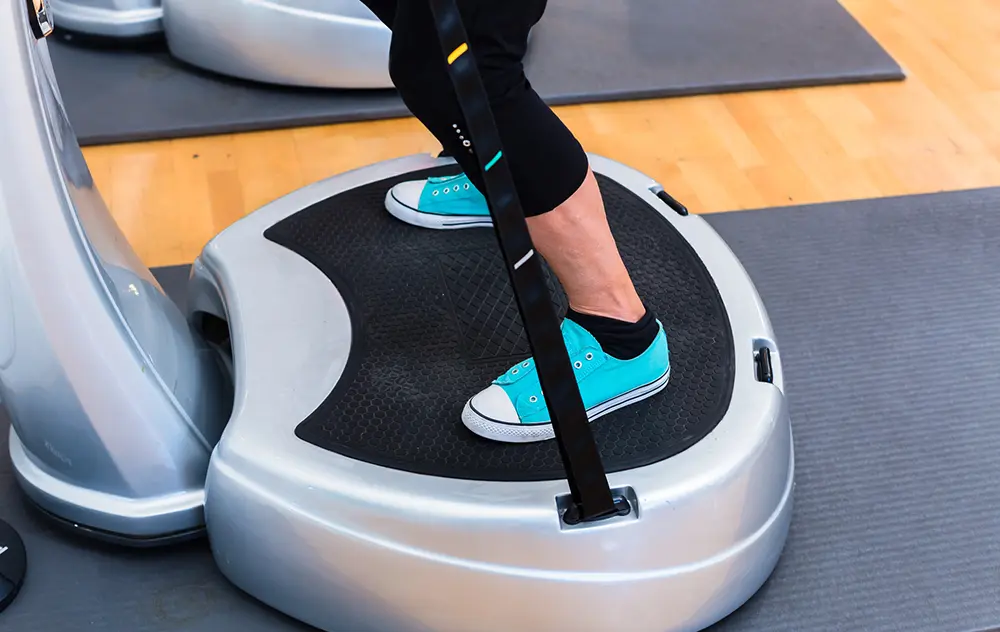
Vibration therapy involves standing, sitting, or performing exercises on a platform that sends low-frequency mechanical vibrations through the body. These vibrations stimulate rapid muscle contractions (sometimes up to 30-50 times per second) mimicking the natural reflexes involved in movement.
The technique was originally developed in the 1960s to prevent muscle and bone loss in astronauts exposed to zero gravity. In recent decades, researchers have explored its use for medical rehabilitation, including osteoporosis, Parkinson’s disease, and cerebral palsy.
When used correctly, low-intensity vibrations (usually less than 1 g) can temporarily improve circulation, reduce stiffness, and enhance muscle engagement, especially for children who cannot perform high-impact exercise.
Are home vibration plates the same as clinical vibration therapy?
No. Commercial “power plates” designed for home fitness are not the same as the carefully monitored devices used in clinical cerebral palsy therapy. Medical-grade vibration platforms are calibrated for safety, frequency, and duration based on the child’s diagnosis and physical tolerance.
By contrast, inexpensive consumer plates often produce inconsistent or excessive vibration. According to a 2023 review in Archives of Rehabilitation Research & Clinical Translation, exposure to vibration forces above 1 g can cause fatigue, dizziness, or even tissue damage over time, especially in growing children.
In professional settings, therapists use vibration therapy as a short-term supplement to other treatment, often during supervised physical or occupational therapy sessions, not as a standalone exercise or daily routine.
Why are vibration plates going viral in 2025?
The surge in popularity comes from social media. Influencers and wellness companies now promote vibration plates as tools for “cellular activation” or “retraining muscles.” Parents of children with disabilities may be drawn to online testimonials showing kids standing more upright or walking with improved balance after a few weeks of use.
While those videos are heartwarming, they rarely tell the whole story. Children shown using the devices are typically also receiving conventional physical therapy, gait training, and stretching programs. Without that context, results can be misleading.
Experts caution that vibration therapy for cerebral palsy should never be started based on social-media claims alone. Proper medical evaluation and supervised sessions are essential.
Should I buy a vibration plate for my child with CP?
For most families, the answer is no, at least not without direct medical supervision. Home devices may not match clinical vibration parameters and can expose children to excessive forces.
Children with cerebral palsy often have fragile bones, muscle stiffness, and uneven tone. These characteristics make them more vulnerable to injury from uncontrolled vibration. Common risks include increased muscle fatigue, joint pain, or overstimulation of spastic muscles.
If a physician or rehabilitation specialist recommends trying vibration therapy, it should occur only under trained supervision, using medically approved equipment and settings tailored to the child’s needs.
What about claims that vibration plates can help cerebral palsy?
Supporters argue that vibration therapy can:
Improve muscle tone and strength
Reduce spasticity
Increase bone density
Enhance balance and posture
Improve circulation
Some studies show short-term benefits. For instance, a 2022 BMC Pediatrics trial found modest improvements in gait speed and muscle coordination among children with spastic cerebral palsy after 12 weeks of controlled vibration training.
However, the improvements were small and often temporary. Researchers emphasize that vibration therapy works best as part of a multimodal rehabilitation program, not a replacement for established cerebral palsy treatments like stretching, orthotics, or physical therapy.
Are there studies to support this treatment?
Yes, but results are mixed.
A 2023 review published in Archives of Rehabilitation Research & Clinical Translation summarized several small clinical trials. It concluded that low-intensity vibration (<1 g) may temporarily reduce muscle spasticity and improve mobility in some children with cerebral palsy.
However, the authors also warned of potential harm from overuse or high-intensity exposure, including spinal stress and vestibular (balance) disturbances. They emphasized that vibration therapy “should be used with caution” and that long-term safety data in children remains limited.
Similarly, the Timmermans Method review noted that vibration therapy can improve joint movement and core stability, but only when part of a structured physical therapy program led by qualified professionals.
What risks should parents know about?
Like any physical intervention, vibration therapy carries risks, especially for children with existing musculoskeletal or neurological conditions.
Potential side effects include:
Headaches, nausea, or dizziness from over-stimulation
Increased muscle stiffness or fatigue after prolonged sessions
Spine or hip discomfort in children with skeletal misalignment
Circulatory strain in children with cardiovascular or metabolic disorders
Children with shunts, hip dysplasia, bone fragility, or seizure disorders may face higher risk. The International Standards Organization (ISO 2631) sets exposure limits for vibration, but consumer devices rarely adhere to these standards.
In short: the therapy is promising, but not risk-free. Always seek professional medical guidance before beginning.
Are there safer or comparable treatments?
Several well-established cerebral palsy therapies provide similar or greater benefits with fewer unknowns:
Treadmill-based gait training helps improve walking coordination.
Aquatic therapy uses buoyancy to reduce joint strain and enhance muscle movement.
Constraint-induced movement therapy (CIMT) strengthens weaker limbs through guided repetition.
Robotic and virtual-reality rehabilitation programs now provide structured, measurable feedback without exposing the body to mechanical vibration.
These evidence-backed interventions have decades of clinical data behind them, whereas vibration therapy remains experimental in pediatric neurorehabilitation.
Who might benefit most from vibration therapy?
If vibration therapy is used, it may help:
Children with mild to moderate spastic cerebral palsy who can stand independently.
Those undergoing intensive rehabilitation to improve balance or gait.
Patients closely supervised by a multidisciplinary team experienced in pediatric rehabilitation.
Children with severe spasticity, uncontrolled seizures, or orthopedic instability should avoid vibration therapy unless specifically cleared by a physician.
What could this mean for future cerebral palsy treatment?
Researchers remain optimistic. Early evidence suggests vibration therapy could complement traditional cerebral palsy therapy by enhancing muscle activation and circulation. Ongoing studies aim to fine-tune parameters (such as frequency, amplitude, and session duration) to make the method safer for children.
In the next few years, clinicians may establish clearer protocols for vibration plates in pediatric neurorehabilitation. Until then, vibration therapy should be viewed as experimental, not a substitute for proven treatments.
Vibration plates for CP: Best used with oversight
Vibration plates and power-plate devices offer an exciting glimpse into new forms of movement therapy, but for children with cerebral palsy, they remain a tool that requires careful medical oversight. Low-intensity, short-duration use under professional supervision may benefit some children, but unsupervised home use can be risky.
For now, parents should approach vibration plates with curiosity, not certainty. Ask your child’s rehabilitation team whether controlled vibration therapy fits safely into your child’s treatment plan, and remember that the best cerebral palsy treatments are those grounded in both evidence and empathy.
Sources
Adaikina, A., et al. Vibration therapy in young children with mild to moderate cerebral palsy: does frequency and treatment duration matter? A randomised-controlled study BMC Pediatrics. (January 2023). Retrieved from link.springer.com/article/10.1186/s12887-022-03786-1
Godley, D., Csongradi, J. Whole body vibration therapy for children with disabilities: a survey of potential risks and benefits. Archives of Rehabilitation Research and Clinical Translation. (September 2023). Retrieved from pubmed.ncbi.nlm.nih.gov/38163033/
Our nurses, patient advocates and legal experts are solely focused on bringing you the latest cerebral palsy information, options for financial assistance and access to community support.
Written by
Cerebral Palsy Center
Our nurses, patient advocates and legal experts are solely focused on bringing you the latest cerebral palsy information, options for financial assistance and access to community support.