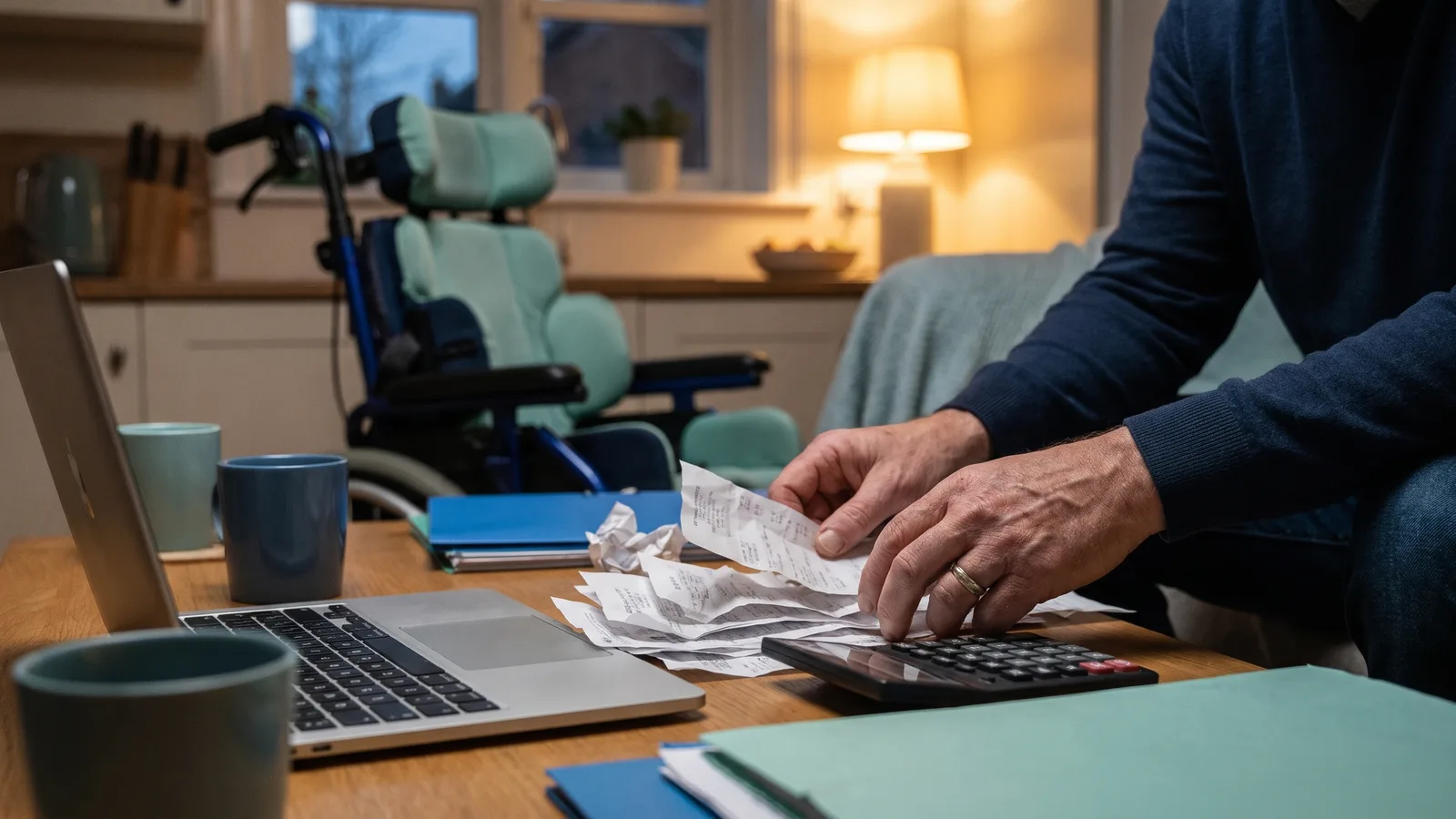
Cerebral palsy financial assistance comes from two places. Public programs (Medicaid, Medicaid waivers, SSI, Social Security benefits on a parent’s record, ABLE accounts and vocational rehabilitation) pay for most long term costs. Private grants fill specific gaps, usually one piece of equipment, a block of therapy or a home or vehicle change, and the awards we found run from about $1,000 to $10,000 per child.
Every program below was checked on its own website in October 2026. Each has its own income limits, age limits and waiting lists, and most turn away more families than they fund. None of this guarantees that any family will qualify, so apply to several, and keep copies of prescriptions, equipment quotes and therapy letters ready.
“Even with our numerous success stories, we still turn away more than 50-percent of our applicants due to our limited funds.”
— Small Steps in Speech, smallstepsinspeech.org
Start with the public programs
Grants rarely exceed a few thousand dollars, so public programs come first. Our guide to disability benefits for cerebral palsy explains each one in depth. Here is the short version, with the official page for each.
- Medicaid waivers. Home and community based services (HCBS) waivers pay for care at home instead of in an institution, including personal care, habilitation and respite. Each state chooses the maximum number of people its waiver will serve. Medicaid itself is changing under the July 2025 federal budget law, covered in our 2026 Medicaid explainer for CP families.
- SSI. Supplemental Security Income is for children and adults with little income and few resources. The resource limit is $2,000 for an individual, and when a parent applies for a child, Social Security looks at the parents’ income and resources too.
- Benefits on a parent’s record. An unmarried adult whose disability began at age 21 or younger may receive Social Security family benefits once a parent is entitled to retirement or disability benefits. This is often called Childhood Disability Benefits, and it is paid on the parent’s work record rather than the adult’s own.
- ABLE accounts. A tax advantaged savings account for anyone whose disability began before age 46. Up to $100,000 in an ABLE account does not count as a resource for SSI. The age limit was 26 until the end of 2025, and our ABLE accounts update covers the change.
Equipment and mobility
Every state, plus Washington, DC, Puerto Rico and four territories, has an assistive technology program listed by the AT3 Center. Depending on the state, these offer short term device loans (try a walker or communication device before buying), demonstrations, reused equipment and financial loans. Borrowing first can stop a family from spending a grant on the wrong chair. Our assistive devices guide describes the equipment itself.
Variety, the Children’s Charity works through local chapters, called tents, which you can find through Variety’s chapter search. Programs differ by chapter. In Texas, the Heart of Variety grant can pay toward electric wheelchairs, adaptive strollers, communication tools, therapy and home accessibility, with a lifetime cap of $10,000 per child. Families are drawn at random from a waitlist that the chapter says holds more than 900 families. Its current request cycle is scheduled for October 7 to November 20, 2026.
Home and vehicle modification
Friends of Man helps people nationally with wheelchair ramps, stairlifts, lift chairs, limited bathroom modifications and vehicle hand controls (not full van conversions), along with wheelchairs, braces and medically prescribed assistive technology. A family cannot apply directly. A referring professional such as a caseworker, health care professional or social worker applies on your behalf, and household income must be at or below 300% of the federal poverty guidelines.
For adults working toward a job, the state vocational rehabilitation agency can pay for rehabilitation technology, including vehicular modification, when it is part of an employment plan.
Therapy costs
The UnitedHealthcare Children’s Foundation pays toward medical costs that insurance leaves behind, up to $5,000 in 12 months and $10,000 in a lifetime. The child must be 16 or younger and have commercial health insurance as the primary plan (Medicaid or CHIP is accepted only as secondary coverage). Family adjusted gross income must fall under a limit, for example $135,000 for a family of four.
Small Steps in Speech funds speech and language help for ages 3 to 22: communication devices (up to $1,200, with an AAC evaluation required), intensive speech camps and therapy not covered by insurance. Family income must be $125,000 or less, grants cover only future services, and deadlines fall on February 1, May 1, August 1 and November 1. Our cerebral palsy treatment costs guide shows what therapy and equipment typically cost.
Respite care
Respite is one of the services Medicaid HCBS waivers can cover. Outside Medicaid, the ARCH National Respite Network runs a free National Respite Locator and points families to their state Lifespan Respite program first. ARCH notes that some of those state programs offer vouchers to help pay for respite in an emergency.
Education
School costs are covered by law rather than grants. Under federal special education rules (34 CFR 300.105), a public school must provide the assistive technology a child needs as part of special education or related services, and the IEP team can decide the child may use a school-purchased device at home. For students heading toward work or college, vocational rehabilitation must offer pre-employment transition services statewide, and it can help with training costs once other grant aid has been sought.
Grants for adults with cerebral palsy
Most private grants stop at age 16 or 22. For adults, the realistic sources are vocational rehabilitation, Childhood Disability Benefits, ABLE accounts, the state assistive technology program and Friends of Man, which lists no age limit. Our page on support for adults with cerebral palsy covers health care and daily living alongside the money.
Common questions
Are there grants for adults with cerebral palsy?
Fewer than for children. Friends of Man and the state assistive technology programs serve adults, and vocational rehabilitation pays for equipment, training and vehicle changes tied to employment.
What are cerebral palsy lifetime benefits?
The phrase usually means Social Security benefits that can continue through adulthood, such as benefits on a parent’s record for an adult whose disability began at 21 or younger. Social Security decides eligibility case by case.
Where should a family start?
Apply for Medicaid and SSI first, ask your state Medicaid agency about its waivers, then use grants for the specific items those programs will not pay for.