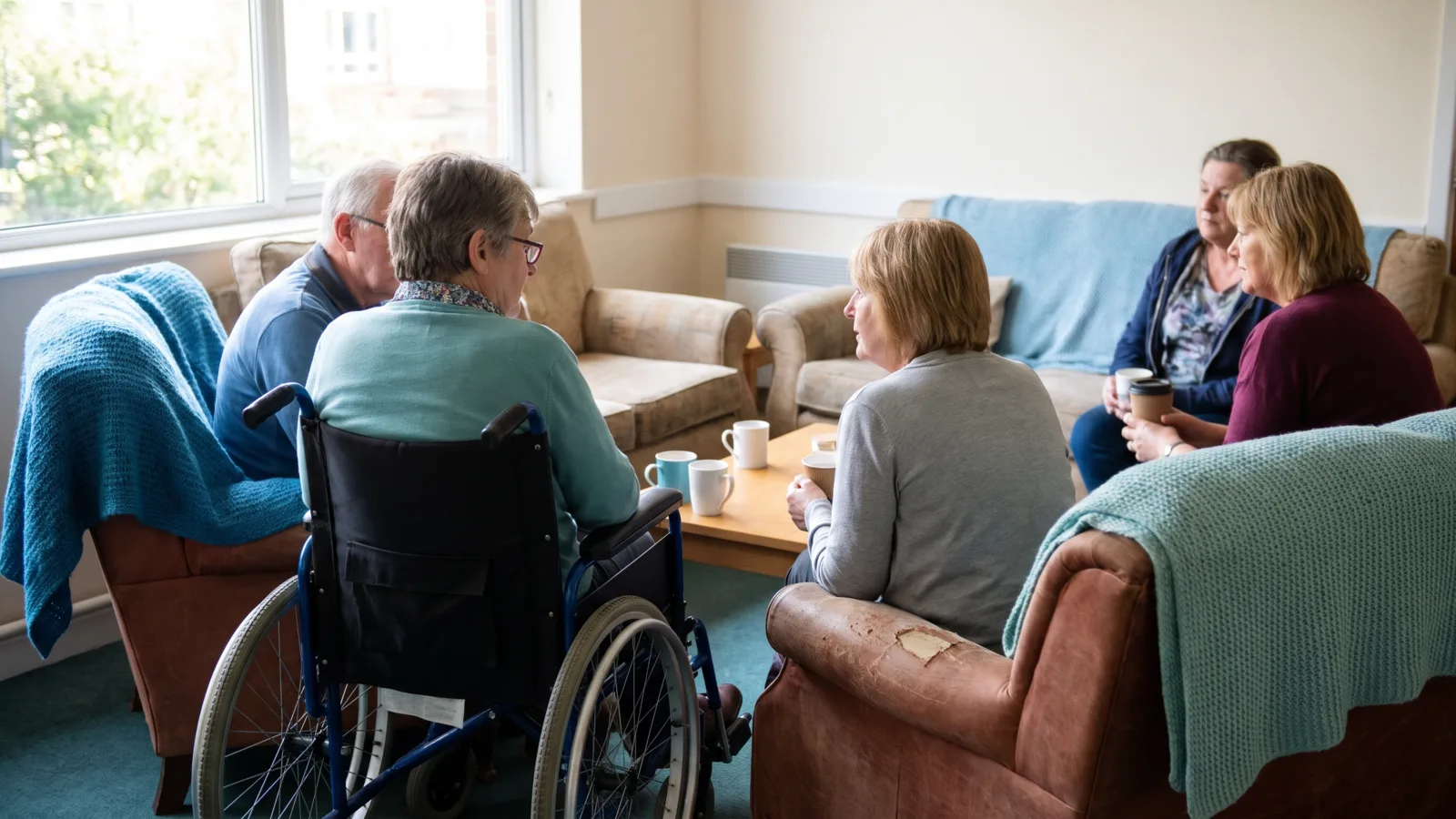
The cerebral palsy support groups and forums that were open and active when we checked on October 29, 2026 come in four kinds. National organizations run their own communities: the Cerebral Palsy Foundation, United Cerebral Palsy’s 57 local affiliates and the Cerebral Palsy Research Network’s free MyCP portal. Parent matching programs pair you with another family. Open forums include Scope’s online community in the UK and Reddit’s r/CerebralPalsy. Facebook groups carry most of the daily conversation.
Which one fits depends on who is asking. A parent of a newly diagnosed toddler usually wants a parent a few years further along. An adult with CP may want people their own age who deal with pain, fatigue or work, not a room full of parents. Below is what each option actually offers, and how to tell a well run group from one that spreads bad medical advice or puts children’s photos at risk.
For the wider map, including the larger Facebook groups and local chapters, see our cerebral palsy support groups and organizations guide.
“Turn off location sharing and remove geotags from posts.”
— American Academy of Pediatrics, sharenting guidance, April 2026
National organizations with their own communities
Cerebral Palsy Foundation
The New York based Cerebral Palsy Foundation runs CPResource.org, a free library of fact sheets, expert videos, podcasts and personal stories, including profiles of adults with CP. Its grassroots parent network came from a merger. In February 2019 the foundation merged with Reaching for the Stars, the parent founded group that created National Cerebral Palsy Awareness Day in 2006, and took in what CPF describes as a network of more than 21,000 parents and caregivers. The old Reaching for the Stars website showed no content when we checked, so families looking for that group should start at CPF.
United Cerebral Palsy affiliates
United Cerebral Palsy, which also uses the name Life Without Limits, lists 57 affiliates serving about 200,000 people a year. Each affiliate is an independent local nonprofit, so what one offers in Ohio can look nothing like what another offers in Arizona. The affiliate finder searches by ZIP code and by service. On October 29, 2026, 14 affiliates were tagged for social support programs, 27 for respite care, 21 for after school or summer camp programs and 11 for adaptive athletics.
Cerebral Palsy Research Network (MyCP)
The Cerebral Palsy Research Network’s MyCP portal is free and private. Members get reading matched to their type of CP, surveys and studies they can join, and a forum to discuss lived experience with other members and with doctors. It suits families who want the conversation anchored to research rather than to anecdote.
Being matched with another parent
Parent to Parent USA is a nonprofit alliance of state programs for families of children with disabilities or special health care needs. You contact your local program, a coordinator picks a trained Support Parent who has “walked a similar path,” and that parent calls you. The support is one to one. If your state has no program, the state map page tells families to contact a neighboring state’s.
Parent Centers do a different job. The Center for Parent Information and Resources lists nearly 100 Parent Training and Information Centers and Community Parent Resource Centers across the US and its territories. They work with families of children and young people with disabilities from birth to age 26 and help parents take part in their child’s education, which makes them a good call before an IEP meeting. Our guide to support for CP caregivers covers respite care and time off work.
Cerebral palsy forums and online communities
Scope, a disability charity registered in England and Wales and in Scotland, runs a free online community forum and a helpline (0808 800 3333, Monday to Saturday, 10am to 5pm UK time). Its Cerebral Palsy Network is covered in the adults section below.
On Reddit, r/CerebralPalsy is the busiest open forum we found. Its official Discord server describes it as “a community for people with cerebral palsy to connect and share experiences” and showed 3,186 members on October 29, 2026. A Children’s Mercy Kansas City resource sheet describes the subreddit as a mix of parents, people with CP and professionals. Reddit posts are public and show up in search results. Write as if your child, at 16, will read them.
Facebook holds most of the everyday talk, in groups from a few hundred members to tens of thousands. We could not confirm the current rules or administrators of any named group from outside, so we have not listed them here. Our support organizations page lists the larger ones with member counts recorded on October 9, 2026. Run the checks below before joining any of them.
How to judge a support group
- Look for written rules and moderators who act on them. A group where sales pitches and personal attacks disappear within a day is being looked after.
- Watch how medical questions get answered. A good group sends members back to their child’s care team and shares sources. Be wary of posts promising to cure or reverse CP, offers of supplements or therapies by private message, and anyone telling a parent to stop a prescribed treatment.
- Check who can see posts. A private group with approval questions limits who reads about your child, though any member can still take a screenshot.
- Protect children’s photos. The American Academy of Pediatrics suggests keeping profiles fully private, removing identifying details such as a school name or logo, photographing children from a distance or while they look away, turning off location sharing and geotags, and including the child in the decision.
- Notice how you feel after reading. A group that leaves you more frightened after every visit may be the wrong one, even when its information is accurate.
Support for adults with cerebral palsy
Most CP groups are organized around parents of young children. Adults have fewer options, and the need is real. A 2019 study in JAMA Neurology followed 1,705 adults with CP in UK primary care records and found a 28% higher risk of depression and a 40% higher risk of anxiety than in matched adults without CP.
Scope’s Cerebral Palsy Network is open to people 18 and over who have CP or support someone who does. It meets monthly on Zoom on Wednesday evenings for an hour, has a members only space on the Scope forum, and has covered topics such as aging, personal assistants and employment. It describes itself as supporting the CP community in England and Wales.
In the US, the Cerebral Palsy Research Network and the National Center on Health, Physical Activity and Disability run MENTOR, a free eight week virtual program for US adults 18 and over with a disability. Classes of five or six people meet on Zoom and cover exercise, nutrition and mindfulness, with weekly health coaching. People with CP train alongside people with other disabilities. The r/CerebralPalsy Discord, described above, is also aimed at people with CP themselves rather than their parents.
For benefits, work and independent living after 18, see our guide to resources for adults with cerebral palsy. For how symptoms tend to change with age, read cerebral palsy symptoms in adults, and for day to day routines, our page on living with cerebral palsy.
Common questions
Is there a cerebral palsy forum for parents?
Yes. The MyCP forum, Scope’s online community and r/CerebralPalsy all have parents among their members. For a private conversation with one experienced parent, Parent to Parent USA arranges a one to one match.
What cerebral palsy organizations offer support?
In the US, start with the Cerebral Palsy Foundation, your nearest United Cerebral Palsy affiliate and the Cerebral Palsy Research Network. For school questions, your state’s Parent Training and Information Center is the right contact.
Are there cerebral palsy support groups for adults?
Yes. Scope’s Cerebral Palsy Network is adults only, and CPRN’s MENTOR program is for US adults 18 and over.
Where can I share my family’s story?
You can send it to us through our Share Your Story page. Our editorial team reads every submission before anything is published.