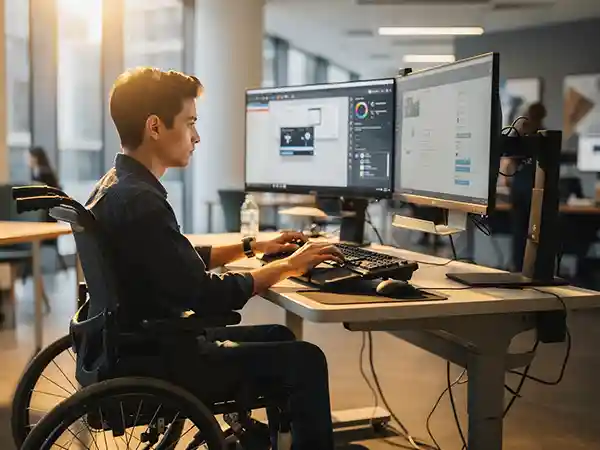
Most children with mild CP grow up to attend regular schools, develop strong friendships, work, and live independently as adults. Life expectancy is generally similar to the general population. Knowing what the prognosis actually looks like helps families focus on what matters most, supporting their child to thrive without overestimating limitations.
Most children attend with minimal or no accommodations
Independent adults
Most go on to work, drive, and live independently
For families newly told their child has mild CP, the most important thing to know is also the most reassuring: most kids with mild CP grow up to live full, independent lives. They attend regular schools, make friends, develop hobbies, learn to drive, work as adults, and often raise families of their own. CP is part of who they are, but it’s rarely the defining feature of their lives. This guide walks through what the prognosis actually looks like: what to expect, what shapes outcomes, and how to support a child to thrive.
For mild CP, life expectancy is typically near or equal to the general population. The reason is straightforward: the complications that affect life span in severe CP (aspiration, recurrent respiratory infections, severe feeding difficulty) are rare in mild forms. Standard medical care, plus management of any specific issues, is usually enough.
Mild CP is usually defined as GMFCS Levels I and II, meaning the child walks independently, sometimes with minor differences in gait or coordination. There may be subtle motor challenges, occasional clumsiness, or specific tasks that require extra effort, but daily life is largely typical. Most studies of life expectancy in this group show outcomes very similar to peers without CP.
Factors influencing life expectancy
A short list shapes long-term health in mild cerebral palsy, and motor function is not at the top of it.
Most children with mild cerebral palsy have isolated motor differences and nothing else. Where epilepsy, intellectual disability or a vision or hearing problem sits alongside the motor picture, that condition tends to drive the outlook more than the cerebral palsy does. Routine pediatric care plus therapy when it is needed covers most of what mild cerebral palsy requires medically, so the practical risks are continuity risks: the handoff from pediatric to adult care, which goes badly for every chronic condition unless somebody plans it. Regular activity adapted to ability protects cardiovascular health, joints and mood. Mental health warrants active attention rather than watchful waiting, for reasons the data below makes uncomfortably clear. And some adults develop secondary tightness, joint wear and pain that respond to renewed therapy, which our page on cerebral palsy and aging covers in full.
Most of these are modifiable or manageable, which is why mild CP outcomes have been steadily improving alongside advances in care.
Comparative analysis with severe cerebral palsy
The contrast between mild and severe cerebral palsy is genuine, and it is worth setting out plainly rather than softening.
On lifespan, mild cerebral palsy tracks the general population while severe cerebral palsy varies with which specific complications are present. On daily function the gap is real and largest in early childhood, minor motor differences on one side and substantial assistance needs on the other. Most children with mild cerebral palsy attend regular schools; more affected children may need specialized settings depending on cognitive and physical needs. Most adults with mild cerebral palsy work, drive and live independently. Mental health is the one row where the gap does not run the way people expect: both groups carry higher rates of anxiety and depression than the general population, and visibility of disability is not the predictor.
The point of comparison isn’t to minimize challenges in severe CP. Those are real and covered in our severity guide. It’s to give families with mild diagnoses a realistic, mostly reassuring picture of what to expect.
Long-term outcomes of mild cerebral palsy
Long-term outcomes for mild CP are generally favorable, especially with consistent therapy in the early years. Most adults with mild CP work, drive, raise families, and live independently. Specific challenges exist, but they’re manageable with thoughtful support.
Tracking outcomes for adults with mild CP is harder than for severe CP, many people with mild CP don’t stay in specialty care into adulthood, which means they don’t show up as easily in research databases. The studies that do follow this group long-term consistently show that mild CP is compatible with most measures of adult success: education, employment, relationships, parenting.
Common long-term challenges
The generally positive picture has specific rough edges, and they are worth naming because families are rarely warned about them.
Subtle differences in fine motor skill, balance or running speed usually persist for life. Most are easy to work around, though they show up in handwriting, sports and anything requiring quick balance changes. Fatigue is the complaint adults raise most often, because ordinary movement costs more effort than it does for peers, and pacing matters more than strength. Muscles that have worked harder for decades tighten and ache. Some adults notice a secondary decline in their 30s or 40s, new pain, weakness or a change in how far they can walk, which often responds to renewed physical therapy rather than to anything drastic. Anxiety, depression and self-esteem concerns run higher than in the general population, particularly through adolescence. A few children carry minor speech or oral-motor differences, and mild cerebral palsy sometimes coexists with specific learning differences that need accommodation even when overall cognition is typical.
None of these are typically life-altering on their own. The pattern matters, recognizing them early and supporting the child through them is what keeps minor challenges from becoming bigger ones.
Success stories in managing mild cerebral palsy
In practice, adult outcomes look ordinary, which is the point.
Most attend regular schools with or without an IEP, and many go on to college, vocational training or graduate degrees at typical rates. Most work, often in the same fields as anyone else, and while some shape their job choices around physical limits, many do not. Most form lasting friendships and romantic relationships, marry and raise children. Most live independently without accommodations beyond what they used as children, and most drive, sometimes with hand controls and sometimes with nothing at all. Plenty compete in sports through adaptive programs or standard ones. And a striking number become effective self-advocates, for accommodations, for accessibility, and for people coming up behind them.
The broader picture is that mild CP shapes life but rarely defines it. Adults look back on childhood therapy as helpful background but don’t generally describe their lives as being shaped primarily by CP.
What thriving with mild CP looks like
For children who get good early support, the common outcome is regular school attendance with minor accommodations or none, typical academic and social progression, physical activity that adapts as they grow, an independent transition into college and work, and self-advocacy skills built alongside the academic ones.
None of that is a stretch goal. It is what the trajectory looks like when early intervention happens and nobody treats the child as fragile.
Future outlook for mild cerebral palsy
The outlook for kids diagnosed with mild CP today is genuinely better than it was for those diagnosed a generation ago. Earlier identification, better therapy approaches, advances in adaptive technology, and shifting attitudes toward disability inclusion all contribute to outcomes that are steadily improving.
Three things have changed in the past 20 years that meaningfully shift the prognosis for mild CP. First, earlier diagnosis through tools like the General Movements Assessment and HINE means therapy can start in the first months of life. Second, advances in therapy approaches and adaptive technology give kids better tools. Third, broader cultural shifts toward inclusion and accessibility mean kids with mild CP face fewer external barriers than previous generations.
Advancements in treatment options
Several therapy advances matter specifically at this end of the spectrum.
Modern physical therapy for mild cerebral palsy targets named functional goals, running, climbing, a specific fine motor task, rather than general motor work, and goal-directed training tied to goals the family picked outperforms open-ended therapy on both motivation and measurable progress. Constraint-induced movement therapy, developed for adult stroke and adapted for children, builds use of the affected side in hemiplegic cerebral palsy. Pool-based therapy supports motor work for children with subtle balance problems. Adaptive sports programs have expanded from cycling to inclusive recreational leagues. Selective dorsal rhizotomy and botulinum toxin injections sit further along the spectrum, generally reserved for moderate spasticity but occasionally applicable here, and our page on surgical treatments covers when they make sense.
Role of technology in improving prognosis
Technology contributes in ways that are unglamorous and cumulative.
Better MRI and more refined assessment mean intervention starts sooner. Modern orthotics and ergonomic tools are far better than what existed a generation ago. Speech-generating devices and apps support children with subtle speech differences, while speech-to-text software and the accessibility features now built into ordinary phones and laptops carry a lot of the load at school. Fitness trackers make physical activity easier to sustain. Telehealth puts specialty follow-up within reach of families hours from a major center. And the normalization of remote work and ergonomic equipment has quietly opened careers that used to be closed.
Improving mild cerebral palsy prognosis
The single most important thing families can do to support good outcomes is start early and stay consistent. Therapy in the first 3 years builds foundations that pay off for decades. School-age and adolescent support adapts to evolving needs. Adult care addresses the issues that emerge over time.
Improving the prognosis isn’t about doing more, it’s about doing the right things at the right time. The strongest foundation is built in the early years; the strongest adult outcomes come from consistent support through transitions.
Importance of early intervention programs
Early intervention matters even here, and the reason is biological rather than motivational.
Neuroplasticity peaks in the first three years, so therapy started in infancy builds motor circuits more effectively than the same therapy delivered at five. Foundational skills compound: head control supports reaching, reaching supports play, play supports learning, and an early gap ripples forward through all of it. Federally funded early-intervention services under IDEA cover most children with mild cerebral palsy regardless of family income, and our guide to the importance of early diagnosis in cerebral palsy explains how to get in the door. Visits typically include teaching parents to extend the work into daily routines, which is where most of the progress actually happens, and children who arrive at school with established skills and clear goals transition into school-based services far more smoothly.
Children with mild CP who get consistent early intervention often reach typical motor milestones with only minor delays, while those who don’t may carry larger gaps that become more apparent at school age.
Integrating physical and cognitive therapies
Good ongoing therapy through childhood has a recognizable shape.
Physical therapy builds gross motor skill, balance and coordination, often weekly in the early years and tapering as the child progresses. Occupational therapy handles fine motor and self-care: dressing, feeding, handwriting. Speech therapy comes in where communication or oral motor function is affected, and includes feeding work in younger children. IEPs and 504 plans formalize what the school owes. Adaptive sports keep activity and social connection going. Mental health support matters most in adolescence, when identity and disability awareness collide, and a therapist who understands disability is worth finding. Self-advocacy training is the piece most often skipped and the one that best predicts how adulthood goes.
The pattern across these is consistent: targeted, family-centered, goal-driven support that adapts as the child grows.
The most underrated factor: how parents talk about CP
Research on long-term outcomes consistently identifies one factor that doesn’t fit neatly into medical categories: how the child grows up thinking about their own CP. Kids whose families treat CP as one part of who they are (not the central feature, not a tragedy) tend to develop stronger self-concept, better mental health, and more confident self-advocacy. The framing matters because kids absorb it. Most adults with mild CP describe their childhood not as “living with CP” but as “growing up,” with CP being one piece of background.
Even mild CP can warrant legal review
Some families assume that “mild” means “not worth pursuing.” That’s often not accurate. The lifetime cost of CP (therapy through childhood, ongoing therapy in adulthood, occasional surgery, adaptive equipment, lost work potential) can be substantial even in mild cases. When CP resulted from preventable medical errors during birth, families can sometimes recover those costs through a birth injury claim, regardless of severity. Our birth injury lawyers review cases of all severities. Request a free case review.
Need help thinking through long-term planning?
Our nurse advocates can help you think through what therapy makes sense at each age, school accommodations, and connecting with families who’ve already navigated similar journeys. Get a free, confidential evaluation.
Frequently asked questions about mild CP prognosis
Generally very good, and there is longitudinal data behind that rather than reassurance. Following 657 children with cerebral palsy through 3,455 assessments up to age 21, researchers found no evidence of functional decline in GMFCS Levels I and II, while Levels III, IV and V peaked around age seven and then lost ground. Most children at Levels I and II attend regular schools, work as adults and live independently.
Not meaningfully. In a Western Australian study that linked a state cerebral palsy register to death records for 3,185 people born between 1956 and 2011, the 22% with the mildest impairment survived to 58 years at rates matching the general population. Across 51,923 people tracked in California between 1983 and 2010, survival to adulthood among ambulatory children changed by less than 1%, because there was almost nothing to improve.
Because the first three years are when neuroplasticity is greatest, and therapy delivered then builds motor circuits that identical therapy at five does not fully replicate. The gains also compound: better head control supports reaching, reaching supports play, and play supports learning. Children who miss that window often carry gaps that only become obvious at school age.
Therapy, mostly, rather than medication or surgery. Physical therapy for gross motor skills, occupational therapy for fine motor and self-care, speech therapy where communication or feeding is affected, and orthotics for specific activities. Goal-directed training aimed at a goal the family chose measurably outperforms open-ended therapy. Selective dorsal rhizotomy and botulinum toxin exist but are uncommon at this severity.
Yes. Most attend regular schools, often with minimal accommodation, and many need none at all. Where support is needed, an IEP or 504 plan formalizes it: extra time, modified PE, accessible facilities, or therapy delivered inside the school day.
The extent of brain injury visible on MRI, how early intervention started, and whether other conditions are present. Epilepsy, intellectual disability or a vision or hearing impairment tends to shape the outlook more than the motor difference does. Access to care and continuity of follow-up account for much of the rest.
Watch mental health as closely as motor function. Across 1,705 adults with cerebral palsy matched to 5,115 adults without it, the adjusted hazard of depression was 1.28 and of anxiety 1.40, and the risk was concentrated in those with no co-occurring intellectual disability, meaning the group whose cerebral palsy is mildest. Beyond that: consistent therapy early, accommodations when they are needed, physical activity at the child’s level, and self-advocacy skills built before they are required.