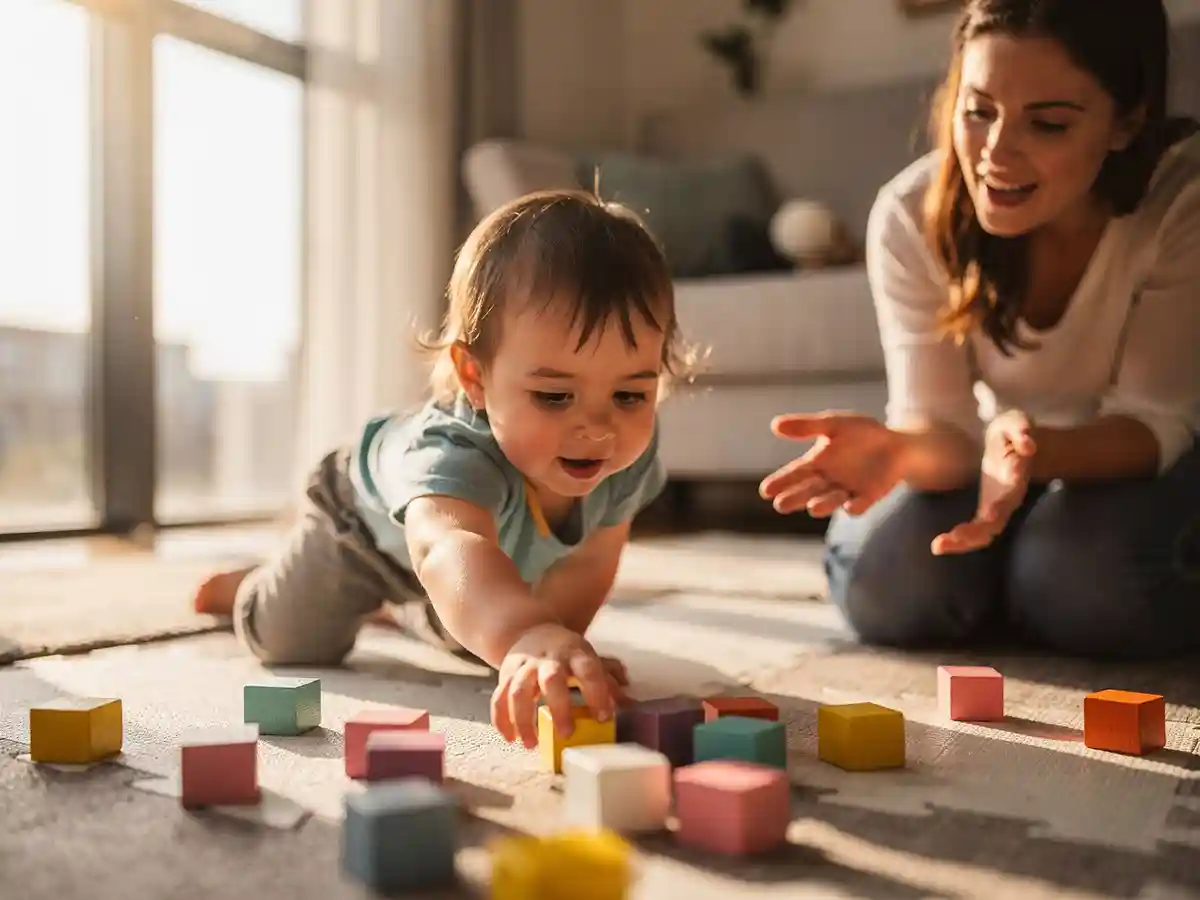
Targeted exercise is the engine of PT for CP: building motor skills, mobility, and confidence one repetition at a time. The best programs are personalized to age, severity, and goals.
Pediatric exercises woven into play and daily routines
Lifelong
Programs evolve from infant play to adult fitness
The interventions that came out of the field’s own evidence review rated effective share one shape: active, task-specific and repeated. Work a child drives scores well. Treatment done to a passive child scores badly, and that single distinction sorts most of what follows.
The 2019 review published in Current Neurology and Neuroscience Reports graded interventions in cerebral palsy with a traffic light system. Bimanual training, constraint-induced movement therapy, goal-directed training, casting, fitness training, action observation and environmental enrichment came out green. Read the list and the pattern is hard to miss: every one of them has the child doing something they are trying to get better at, over and over.
Two things change with exercise and one does not. Function, range and endurance move. The brain injury behind cerebral palsy does not, because the condition is non-progressive by definition.
Saying that plainly is not pessimism, it is what makes the rest of the plan legible. Nothing in a program repairs the lesion, so every exercise on this page is aimed at the body around it: joints that stiffen, muscles that shorten, and the strength difference that opens up between a limb that gets used and one that does not. The benefits of PT are real and they are of that kind.
Improving motor skills and functional mobility
Motor gains come from practising the thing itself, which is why the CP PT exercises worth the time are built around tasks rather than around muscles. A child who needs to get on a school bus practises steps of that height, not quadriceps in isolation, which is why goal-directed training earned its rating and why a goal written as a task is worth more than one written as a joint angle.
For a weaker arm, two named approaches carry the evidence. Constraint-induced movement therapy restrains the stronger hand so the weaker one has to work. Bimanual training gives both hands a job on the same task. A meta-analysis in Pediatrics covering 42 trials and 1,454 children with unilateral cerebral palsy found them close to equivalent when matched for hours, which points at the real variable: how much practice happens, not which name is on it.
Individualized therapy plans for cerebral palsy
A plan worth the paper states four things: the goal, the activity, how many times a week, and for how many minutes. The first two usually appear. The last two are what makes it a plan.
There is a number for the last two. A double-blind randomized trial in Pediatrics gave 36 children with cerebral palsy, mean age 7.7 and spread across all five GMFCS levels, a parent-delivered home program, and the dose that produced significant gains in function ran 17.5 times a month at an average of 16.5 minutes a session. Roughly four short sessions a week. That is a reasonable benchmark to hold a home program against, and a far smaller ask than most families assume they are failing to meet.
Assessing patient needs and goals
Assessment sets the ceiling as well as the starting point. GMFCS level is the strongest predictor of what gross motor progress is realistic, and the goals a family names are what determines whether the program is actually carried out between appointments. Both belong in the evaluation, and a plan that reflects only the first tends to be performed in the clinic and forgotten in the car park.
Customizing exercises for maximum benefit
Strength, endurance and flexibility get combined, and the mix follows the goal rather than a template. Aquatic work is useful where water takes enough weight for a child to move in ways they cannot on land. Yoga, Pilates and tai chi belong to the fitness training category, which is one of the interventions rated effective, and their value is aerobic and postural rather than anything specific to cerebral palsy.
Age-appropriate exercises for cerebral palsy
What a program is for changes with age, and it changes on a schedule the research has mapped. Before the motor peak the work is acquisition. After it, the work is defending what exists.
Five motor development curves were built from 657 children with cerebral palsy and 2,632 assessments and published in JAMA in 2002, and a follow-up in Developmental Medicine & Child Neurology tracked the same cohort to 21. Levels I and II showed no average decline through adolescence. Levels III, IV and V peaked at 7 years 11 months, 6 years 11 months and 6 years 11 months, then lost 4.7, 7.8 and 6.4 points respectively into young adulthood.
So an eleven-year-old at level IV is on a different side of that curve from an eleven-year-old at level II, and a program promising both of them new skills is misleading one of them. School-based PT and adaptive equipment matter more, not less, once a child is past the peak. Our companion guide covers PT for children with CP in detail.
Pediatric exercise staples
Ordered by how much evidence stands behind them:
Practice of the task the goal names, repeated
Bimanual or constraint work where one arm is weaker
Fitness and strength work the child drives
Supported standing, dosed by what it is meant to protect
Passive stretching last, and with a stated purpose
Exercises for children with cerebral palsy
Play is the delivery format because a four-year-old will not do repetitions but will do almost anything to keep a game going. Crawling races, reaching for something worth having, standing on one leg to reach higher, a line on the floor to walk along. The therapeutic content sits inside the game, and the therapist’s skill is in hiding it there.
Therapeutic activities for adults
Adults with cerebral palsy are chronically underserved by therapy services, and the goals shift toward keeping what exists: strength for transfers, endurance against fatigue, and range at the joints that carry the load. Pain and early joint wear are the common complaints, and they are worth raising as their own problem rather than as an inevitability.
Evidence-based interventions for cerebral palsy
One long-standing staple has weaker support than most families are told. The evidence that short daily passive stretching preserves joint range does not hold up, and knowing that changes what the therapy minutes buy.
A Cochrane review pooled 35 trials and 1,391 participants. In people with neurological conditions it found moderate to high quality evidence that stretch produces no clinically important change in joint mobility: a mean difference of 3 degrees immediately after, 1 degree in the short term, and 0 degrees beyond a week. No included study stretched for longer than seven months, so longer durations remain untested.
What holds range is duration rather than repetition. A systematic review in Pediatric Physical Therapy screened 687 studies and produced supported standing recommendations that say so in numbers: five days a week, 60 to 90 minutes a day for bone mineral density, 60 minutes with the hips abducted 30 to 60 degrees for hip stability, 45 to 60 minutes for range of motion, 30 to 45 for spasticity. Hours, not seconds. Ask which of those a standing frame was prescribed for, because the answer sets the clock.
Research-backed therapies
The interventions with the strongest support in cerebral palsy are the ones already named: goal-directed training, bimanual training, constraint-induced movement therapy, casting, fitness training, action observation and environmental enrichment. Botulinum toxin is used alongside therapy to reduce localized spasticity and buy range, and treadmill training with partial body-weight support is widely used with a thinner evidence base than the list above. Asking where a proposed technique sits on that spectrum is a fair question and a good therapist will answer it.
Innovations in physical therapy techniques
Robotic-assisted therapy, virtual reality, wearable sensors and algorithm-driven motion analysis appear in a great deal of writing about cerebral palsy, including an earlier version of this page. None of them has an evidence base in this condition approaching the trials cited above. Treat them as research directions worth watching rather than as care to seek out, and be wary of a clinic that leads with them.
When PT costs trace back to a delivery event
Years of structured PT add up. When CP resulted from preventable medical events, a birth injury claim can fund the therapy your child needs long-term. Request a free case review.
Frequently asked questions about PT exercises
Practice of the actual task a goal names, repeated. For a weaker arm, bimanual training or constraint-induced movement therapy, which a meta-analysis of 42 trials and 1,454 children found close to equivalent when matched for hours. Fitness and strength work the child drives, supported standing dosed by what it is meant to protect, and passive stretching last.
Through active, task-specific, repeated practice. That is the pattern shared by every intervention rated effective in the 2019 traffic light review: bimanual training, constraint-induced movement therapy, goal-directed training, casting, fitness training, action observation and environmental enrichment. Treatment done to a passive child scores badly.
Because the gross motor development curves are steepest early, and because cerebral palsy can now be identified in the first months of life rather than the second year. Starting on the concern instead of waiting for a confirmed diagnosis is what protects that window.
As soon as there is a concern, without waiting for the diagnosis to be confirmed. Referral costs little and the referral queue is often the longest part of the delay.
They deliver most of it. In a double-blind randomized trial in Pediatrics, a parent-delivered home program produced significant gains in function at a dose of 17.5 sessions a month averaging 16.5 minutes each, across 36 children spanning all five GMFCS levels. Roughly four short sessions a week, which is a smaller ask than most families assume they are failing.
Function, range and endurance improve. The brain injury does not change, because cerebral palsy is non-progressive by definition, so the benefit is in the body around the lesion: joints that would otherwise stiffen, muscles that would otherwise shorten, and the strength gap between a limb that gets used and one that does not.
From an assessment that sets both the starting point and a realistic ceiling, since GMFCS level is the strongest predictor of gross motor progress, plus the goals the family names, since those decide whether the program happens between appointments. Then the dose in writing: sessions per week and minutes per session.