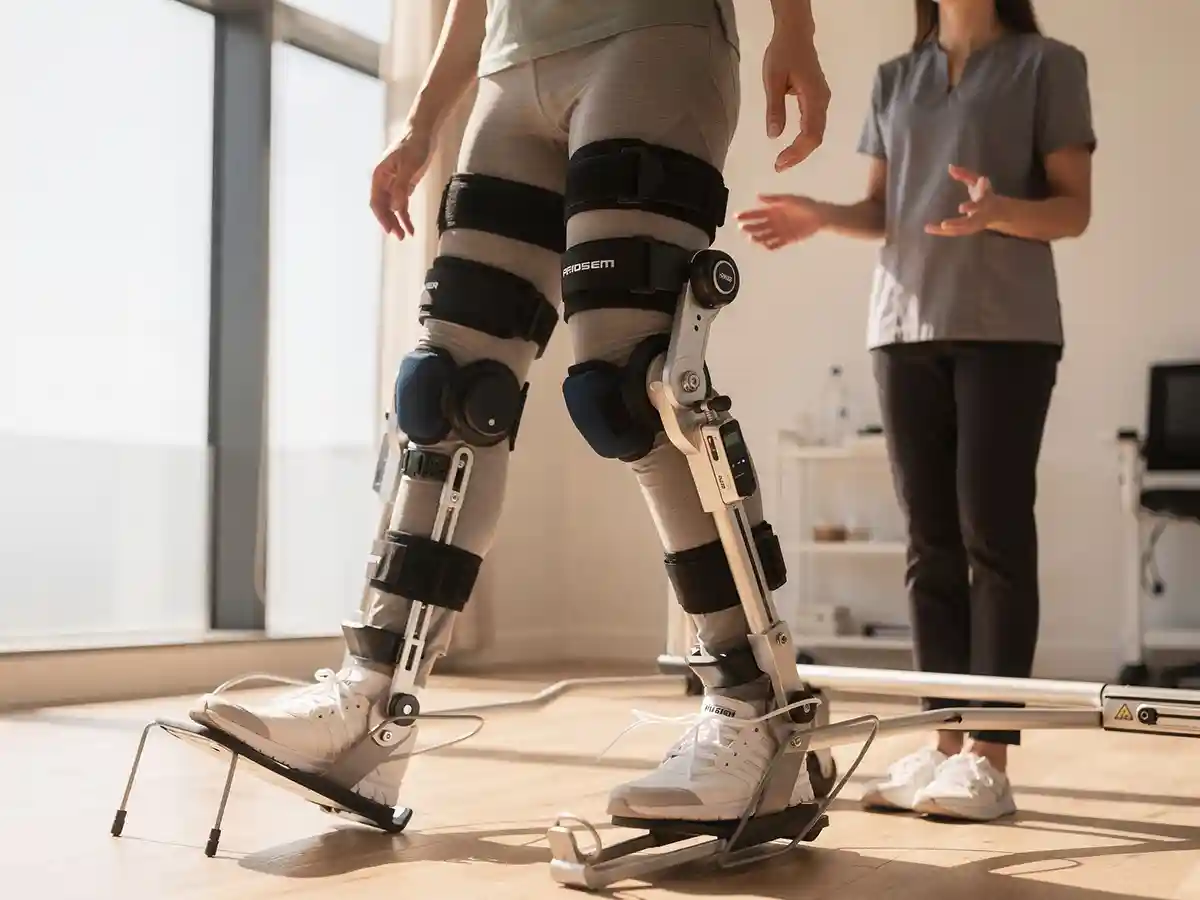
From walkers and gait trainers to communication devices and adaptive seating, the right equipment turns therapy gains into everyday independence. Choosing wisely — and choosing for the long run — matters.
Medically reviewed
Updated May 2026
~ min read
Customized
Equipment fitted to the individual’s body and goals
Evidence-based
Robotics, VR, and sensor devices guided by clinical data
Independence
Equipment turns therapy gains into daily-life function
CP requires a comprehensive approach to therapy — and adaptive equipment is often the bridge between in-clinic progress and real-world independence. The equipment promotes independence and facilitates daily activities, ranging from mobility devices to therapy aids. Understanding the options is essential for caregivers, therapists, and families.
This page covers the major categories of adaptive equipment, how to integrate them into therapy, and the safety considerations every family should know. For the broader picture, see physical therapy for cerebral palsy.
Choosing the right equipment involves considering each individual’s specific needs and capabilities. Options range from simple aids like canes and walkers to more complex devices like standing frames and powered wheelchairs.
The right equipment makes a profound difference — improving mobility, assisting daily tasks, and contributing to psychological well-being by enhancing independence. Selecting the right tools is fundamental to a personalized therapy plan.
Top mobility devices for enhanced movement
Mobility devices are essential supports:
Manual and powered wheelchairs — the most common mobility aids, providing freedom and accessibility
Walkers and gait trainers — help individuals improve walking and build endurance
Canes and crutches — for those needing partial support
Standing frames — weight-bearing equipment that helps prevent contractures
Adaptive bicycles — therapeutic exercise plus recreation
Properly fitted mobility equipment greatly enhances participation in everyday activities. Most devices are adjustable to accommodate growth and changing needs over time.
Essential supportive devices for daily use
Beyond mobility, several categories support everyday activities:
Bathroom aids — bath chairs, grab bars, raised toilet seats
Specialized seating — supportive postural systems for home, school, and travel
Communication devices — from picture boards to speech-generating tablets and eye-gaze systems
By reducing dependence on caregivers for basic activities, these supportive devices empower individuals to engage more fully in daily life — while reducing strain on caregivers.
Cerebral palsy therapy tools for effective treatment
Effective treatment uses a variety of therapy tools tailored to specific therapeutic goals. Customized equipment is especially valuable because it can be modified to each individual’s needs.
The integration of mobility devices into therapy sessions improves motor skills, while occupational therapy aids develop fine motor function and daily-task independence.
Physiotherapy tools for muscle strengthening
Physiotherapy focuses on strengthening and improving movement patterns:
Resistance bands — for progressive strength training
Therapy balls — for core control, balance, and positioning
Standing frames — weight-bearing in supported position
Treadmills with body-weight support — for gait training
These tools enhance muscle tone and coordination, promote better posture, and reduce contracture risk over time.
Dressing and feeding aids — button hooks, zipper pulls, adapted utensils
With consistent use, these tools build control and dexterity — fostering greater independence in school, work, and personal activities.
Innovative equipment for cerebral palsy therapy
Advances in technology have opened new possibilities. Specialized bicycles, ergonomic treadmills, robotics, virtual reality — equipment design is more dynamic and personalized than ever before.
These innovations improve physical health while contributing to emotional and mental well-being by making therapy varied and engaging.
Latest rehab tech
Innovations expanding what therapy can do:
Robotic-assisted gait training
Virtual reality balance and coordination platforms
Sensor-based wearables with real-time feedback
Functional electrical stimulation systems
3D-printed custom orthotics and grips
Latest rehabilitation technology advancements
Recent advances offer promising new therapy options:
Robotics — assistive devices that guide movement and build motor learning
Virtual reality — engaging environments for repetitive practice
Sensor-based devices — real-time feedback on movement quality
Computer-based training programs — gamified rehab activities
These technologies enhance motivation, encourage correct movement patterns, and lead to better outcomes.
Customized solutions for individual needs
Customization is central:
Custom seating systems — matched to body shape and postural needs
Orthoses — molded to the individual’s limb and gait
Adaptive communication devices — programmed to the user’s vocabulary and abilities
Devices developed in collaboration with therapists, prosthetists, and medical professionals
Using therapy equipment for cerebral palsy
Equipment is only as useful as the routine that surrounds it. Integration into daily life — combined with professional guidance — ensures interventions are effective and sustainable.
By understanding how to use devices safely, individuals can engage more fully in their therapy — resulting in improved physical abilities and greater independence.
How to incorporate devices into daily routines
Set a consistent schedule including mobility device use
Designate specific times for exercises that use equipment
Make therapy a natural part of the day, not a separate event
In-home PT works especially well when devices are readily available
Build incremental change rather than expecting dramatic shifts
Safety tips for using adaptive equipment
Ensure equipment is properly fitted and maintained
Schedule regular checks for wear and tear
Adjust devices for growth and changing needs (typically every 6–12 months for growing children)
Get training in safe use from therapists or medical professionals
Follow weight and use limits printed on each device
Cost of adaptive equipment over a lifetime
A wheelchair, communication device, or custom orthotic can each cost thousands — and most need replacement every few years. When CP resulted from preventable medical events, a birth injury claim can fund equipment for a lifetime. Request a free case review.
Frequently asked questions about adaptive equipment
Adaptive equipment for CP therapy includes tools and devices designed to assist with mobility, communication, and daily living. Common examples are wheelchairs, walkers, specialized bicycles, communication devices, and adaptive seating systems.
Adaptive equipment enhances independence and quality of life by enabling individuals to perform tasks they might otherwise find challenging — improving mobility, facilitating communication, and assisting daily activities.
Adaptive equipment helps individuals with CP maximize their functional abilities, promoting participation in daily activities and social interactions. It allows for greater independence and significantly improves overall quality of life.
As soon as it’s clear a child could benefit. Early intervention helps children develop essential skills and adapt easily to using these tools as they grow.
Cost varies based on the type, complexity, and customization required for each individual’s needs. Insurance coverage, government programs, and financial assistance options also affect the overall expense.
In occupational therapy, adaptive equipment helps perform daily tasks more effectively and safely. It supports independence, enhances motor skills, and facilitates participation in activities.
Work closely with therapists and healthcare professionals to assess specific needs and abilities. Customization and trials of different equipment options help determine the best fit for the child’s therapeutic and daily-living goals.