Common ST tools
SLPs draw from a wide toolkit:
- Oral motor exercises and sensory stimulation
- Articulation drills with visual feedback
- Language games and storytelling
- AAC devices and picture-based systems
- Breath support and voice work
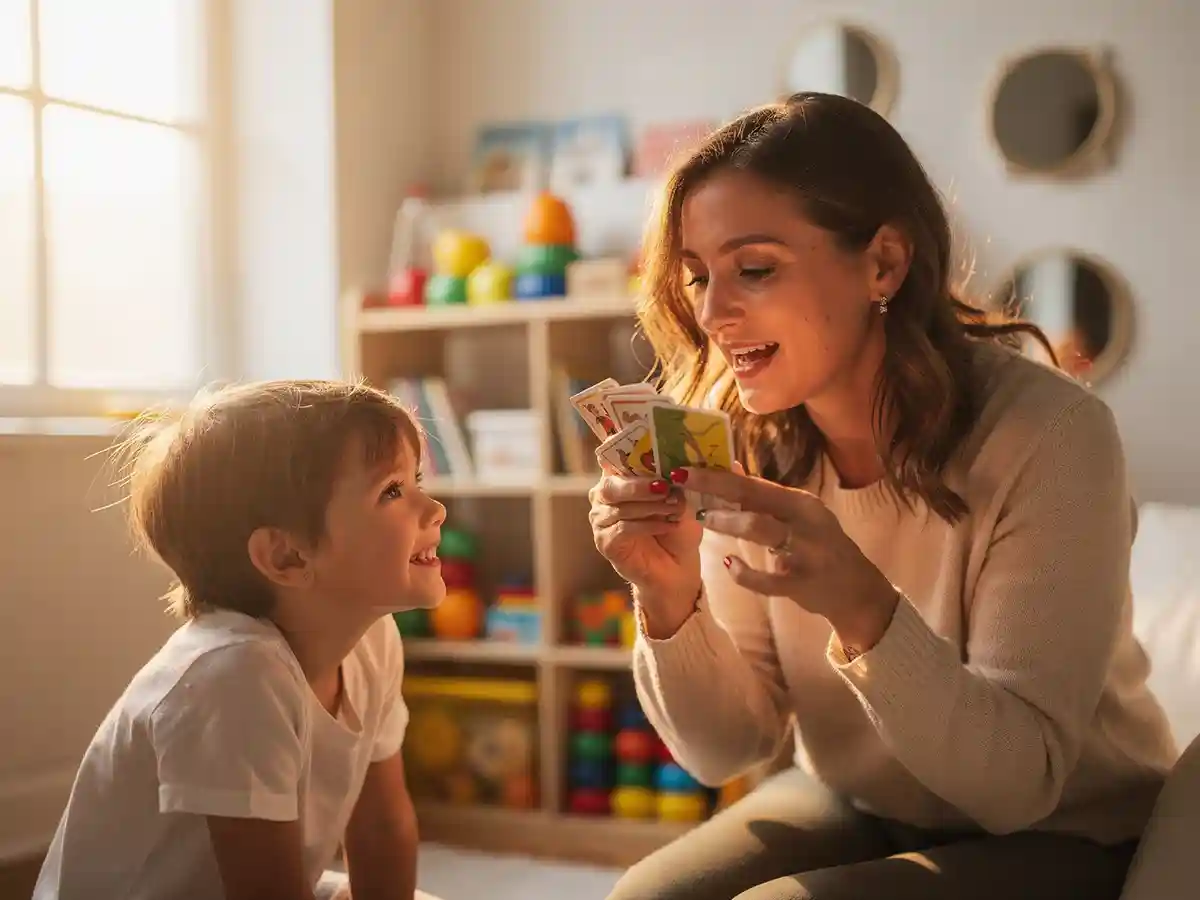
Speech therapy delivers measurable communication gains: clearer speech, stronger language skills, AAC fluency, and easier social participation. The benefits are real and they compound when therapy starts early.
The honest version: published trials of intensive speech therapy in cerebral palsy measured intelligibility gains of roughly ten percentage points, and those gains held at follow-up. That is a real benefit and a modest one, and it is more useful than a promise.
This page sets out what speech therapy is documented to achieve, what it does for swallowing safety, where a communication device fits, and where the evidence is thin. For the approaches themselves see speech therapy techniques, and for the wider picture speech therapy for cerebral palsy.
Individuals with CP experience a range of communication challenges, from speech delays to articulation and language comprehension difficulties. Speech therapy plays a pivotal role through tailored interventions that improve communication and foster social engagement.
The outcome published trials actually measure is intelligibility, the share of what a child says that a listener understands. In a 2013 study of 15 children aged 5 to 11 who received three sessions a week for six weeks, single-word intelligibility rose 10.8% for listeners who knew the child and 9.3% for those who did not. Connected speech rose 9.4% and 10.5%.
Ten percentage points is not transformation, and saying so is more useful than promising more. It is also the difference between a teacher following a sentence and asking for it to be repeated, several times a day, for years.
Social interaction is vital, and CP can make engaging socially challenging. Speech therapy supports both verbal and non-verbal communication tools, enabling effective expression even when speech is limited. This facilitates better social interactions, family activities, and community participation.
Speech therapy addresses both the physical and cognitive aspects of communication. The neurological impact of CP affects speech production and language processing, and speech-language pathologists design interventions that target both.
Dysarthria, childhood apraxia of speech and a phonological disorder all reduce intelligibility and all need different work, which is why the benefit depends on the diagnosis being right. In a 2020 population-based study of 84 children with cerebral palsy, 82% had delayed or disordered speech; among those who spoke, 78% had dysarthria, 54% an articulation delay or disorder, 43% a phonological one, and 17% features of apraxia. Many had more than one at once.
The muscles that produce speech also manage swallowing, so an assessment usually covers both. This is the least discussed benefit and arguably the most consequential: aspiration is a medical risk rather than a communication one, and it is often the SLP who identifies it first.
Techniques are diverse and tailored to each individual. Improving speech in CP patients requires a comprehensive approach that includes traditional and innovative methods, including augmentative and alternative communication (AAC).
SLPs draw from a wide toolkit:
The question parents ask first is whether a device will stop their child speaking. A research review in the Journal of Speech, Language, and Hearing Research pooled studies of augmentative and alternative communication in people with developmental disabilities and found it did not impede speech production, with no study reporting a decrease and most reporting an increase, though the authors noted the gains were modest.
For a child who is minimally verbal, and roughly one in four children in the 2020 cohort study were, a device is what makes the rest of childhood participable. AAC systems run from picture boards to eye-gaze.
Work done while speaking is what carries evidence: target sounds in real words, breath support so a sentence does not fade, and rate control, which for many children with dysarthria buys the most intelligibility for the least effort. Nonspeech oral motor drills, the blowing and straw work often sent home, were examined in a systematic review of 15 studies that found insufficient evidence to support or refute an effect on speech. Our page on improving speech covers that in full.
The role is multifaceted, encompassing interventions aimed at improving communication abilities. Speech development in young children with CP is a critical focus; early intervention significantly influences long-term outcomes.
Speech therapy overlaps with the rest of the plan more than families expect. The same muscles govern swallowing, so an SLP is often the person who flags an aspiration risk. Seating and head control, which are physical therapy’s territory, change what breath support is available for speech. And access to a communication device can depend on hand function or eye-gaze control, which is occupational therapy’s.
The practical implication is to ask whether the therapists talk to each other. A seating change made in one room can undo or unlock work being done in another.
Two honest caveats belong here. The trials that measured intelligibility followed children for weeks after therapy, not decades, so nobody can quote you a twenty-year figure. And the 2023 systematic review that assessed this whole field rated the quality of the evidence very low to moderate, with inconsistent adherence to the principles of motor learning.
What can be said is narrower and still useful. Gains held at follow-up in the studies that looked, and progress is easier to read against typical speech and language milestones. A communication method that works, whether speech or a device, is what makes school, friendships and eventually work accessible, and adults with cerebral palsy consistently name those things rather than articulation scores when asked what mattered.
Measured intelligibility gains of roughly ten percentage points in published trials, meaning more of what a child says is understood by more listeners. Gains held at follow-up. It is a real benefit and a modest one, and no trial has followed children for decades.
In a 2013 study, 15 children aged 5 to 11 had three sessions a week for six weeks. Single-word intelligibility rose 10.8% for familiar listeners and 9.3% for unfamiliar ones, connected speech 9.4% and 10.5%.
Because repetition is what changes a motor pattern, and starting earlier means more total practice. Under IDEA, services can begin at birth, and a referral does not require a confirmed diagnosis.
Because the same muscles manage swallowing. An assessment usually covers both, and aspiration is a medical risk rather than a communication one, so this is often the least discussed and most consequential benefit.
As soon as a delay is suspected. A referral does not require a confirmed cerebral palsy diagnosis, and under IDEA services can begin at birth.
No. A research review found augmentative and alternative communication did not impede speech production in people with developmental disabilities, with no study reporting a decrease and most reporting an increase, though the gains were modest.
Work done while speaking: target sounds in real words, breath support, and rate control. Nonspeech oral motor drills were examined in a systematic review of 15 studies that found insufficient evidence to support or refute an effect on speech.
A 2023 systematic review screened 1,036 studies, included 21, and rated the quality of the evidence very low to moderate, noting inconsistent adherence to the principles of motor learning. Ask for goals with a number and a review date, tracked against typical milestones.
Ask whether the therapists talk to each other. Seating and head control change what breath support is available for speech, and access to a device can depend on hand function or eye-gaze control, so a change made in one therapy can undo or unlock work in another.
Kelsey is an experienced surgical nurse who works extensively with pediatric patients and families navigating birth injuries and cerebral palsy diagnoses. She is licensed by the Missouri Board of Nursing and operates under the Nurse Licensure Compact, allowing her to practice across compact-member states. As both a mentor and patient advocate, Kelsey focuses on safety, communication, and compassionate care: helping families understand medical procedures, treatment options, and the realities of pediatric conditions.
View Kelsey Pabst, RN's full bio →
Our nurses, patient advocates and legal experts are solely focused on bringing you the latest cerebral palsy information, options for financial assistance and access to community support.
Editorial process →The information on this page is provided for general educational purposes and is not a substitute for professional medical or legal advice, diagnosis, or treatment. Always seek the guidance of a qualified physician or attorney with any questions about a medical condition or legal matter. Read our full disclaimer.